
BECERA 2026 PROGRAMME
MONDAY 16TH FEBRUARY
the Studio Birmingham, 7 Cannon Street, B2 5EP
Please note this programme (last updated 27 January 2026) is the latest version but may still be subject to changes. Please always check here for the most up to date version.
All the plenary sessions will be held in the Innovate room (3rd floor) and all refreshments, snacks and lunch will be served in the Achieve room (3rd floor).
8:30 - 9:00 Registration and Coffee
9:00 - 9:10 Welcome and opening remarks
9:10 - 9:55 Keynote Address - Professor Peter Moss
9:55 - 10:50 Coffee followed by Poster Session (start at 10:05)
-
Presenter(s): Georgia Fee, University of the West of England, United Kingdom
Research aims:
Funded by the Economic and Social Research Council (ESRC), this study explores how participatory pedagogies can be supported within the Curriculum for Wales.
Relationship to previous research:
Although Welsh legislation is supportive of children’s rights, there is currently a gap between policy rhetoric and guidance for practitioners. This study addresses the gap between policy intent and classroom practice by examining how participatory rights are understood and enacted by teachers, student-teachers and children.
Theoretical and conceptual framework:
Situated within a rights-based framework (Bessell, 2017), children are positioned as competent, agentic meaning-makers (Malaguzzi, 1998), whose everyday interactions hold pedagogical value.
Paradigm, methodology and methods:
A multi-method design included legislative analysis (2000–2022), surveys of Initial Teacher Education (ITE) providers (n=9), focus groups and workshops with ITE students and teacher educators, working across one year with in-service teachers and gathering children’s perspectives through focus groups (n=95 across 10 schools) and a Children’s Advisory Board (n=8).
Ethical considerations:
Ethical procedures adhered to the EECERA Code of Ethics (2024), ensuring respect, consent/assent, safeguarding and meaningful participation.
Main findings or discussion:
Both student and in-service teachers were broadly supported about participatory pedagogies but found terminology challenging and reported perceived competing tensions within their roles. Whole school approaches were viewed as enabling factors. Children were not always aware when their participatory rights were upheld and voiced a clear desire for greater choice and agency in their learning.
Implications for practice and policy:
Embedding participative rights in schools must be enacted through a whole-system approach, supported by accountability measures and ongoing professional learning to enable educators to implement participatory practice effectively.
Keywords: classroom participation, children’s rights, initial teacher education, Wales
-
Presenter(s): Nina Taylor, The Open University, United Kingdom
Research aims:
To explore how changes in Early Years funding affected provision in my local area, using quantitative and qualitative data.
Relationship to previous research works:
Research has identified the importance of early childhood education in addressing social inequalities, termed social investment (West et al, 2019). High quality childcare allows parents to return to work, increasing employment productivity, and supports young children’s cognitive and non-cognitive development.
Theoretical and conceptual framework:
Theory of Change (Weiss, 1972; Serrat, 2017) was used as it is a useful framework to explore how government policy was enacted to meet a particular outcome.
Paradigm, methodology and methods:
Funding documents were analysed using discourse analysis. Data on childcare sufficiency assessments explored gaps between supply and demand. A request for stories from parents and practitioners on a private Facebook site led to self-selected participant responses.
Ethical considerations:
Information in the public domain did not require ethical approval. Participants were assured information would be treated confidentially and anonymously.
Main findings or discussion:
Demand outweighs supply in my area with parents reporting having to apply to multiple settings to find a place. Practitioners confirmed there are more parents looking for places than they can provide while some childminders have closed doors because they are no longer viable.
Implications, practice or policy:
There is mismatch between government aims to increase funding and feasibility of providers to meet increased demand. The early years sector has been tasked with executing government policy without structured and financial support to effectively do so. The danger is early childhood education will transition back to pre-regulation days when the sector was used for basic childcare with few qualified professionals.
Keywords: early childhood education, funding, social inequality, provision, policy
-
Presenter(s): Karen Williams, Dawn Jones and Selena Hall, University of Wolverhampton, United Kingdom
Research aims:
The research considers how reflection upon voices of reception children has demonstrated the importance of careful listening and the implications upon the meaningful inclusion of what they have to say
Relationship to previous research works:
The project applies critical reflection upon previous research (Jones et al, 2023) “What I really think about sitting straight, golden time and reward charts”: Gathering 4-year-olds views on behaviourist pedagogy in reception; drawing upon Clark's (2023) narrative of accelerated childhoods.
Theoretical and conceptual framework:
The theoretical framework utilises the 'pedagogy of listening' which is embedded within the Reggio Emilia approach (Rinaldi, 2006) also embodying Clark's (2020) 'slow pedagogy”.
Paradigm, methodology and methods:
Methodology draws upon critical reflective thinking through the Mosaic Approach (Clarke, 2012), with qualitative interpretation of children’s personal and collective narratives. The voice of children directed analysis of data; 45 participating children’s reflections, were carefully considered. Parents opted into their children being part of the research through completion of a consent form.
Ethical considerations:
Respectful representation of their voice was an on-going process ensuring children’s voices are heard and their story is told honestly. The narrative style and presentation of the child’s voice was shared with parents, ensuring a genuine reflection.
Main findings or discussion:
Children’s narratives were?the focal point for interpretation supporting the research team to be informed of the child’s thoughts and viewpoints on ‘what it is like to be in this space’ (Clarke, 2017, P.10) with direct implications for transitional educational experiences.
Implications for practice or policy:
From such respectful relationships, the ability of pedagogues to hear and respond well, has highlighted implications upon the meaningful inclusion of what they have to say.
Keywords:reflective pedagogy, child's voice, time
-
Presenter(s): Khadija Alhashmi, New York University Abu Dhabi, United Arab Emirates
Research aims:
This study explores how parents of young children (0–8 years) in Abu Dhabi view the role of artificial intelligence (AI) in family life. It examines sentiments toward AI and identifies patterns in how parents position AI in relation to children’s development.
Relationship to previous research works:
Research shows that parents’ motivations, trust, and mediation practices shape how children use conversational AI at home (Wald et al., 2023). Studies of parent–child interaction with AI tools highlight diverse parental roles in regulating engagement (Quan, Du & Lyu, 2025). However, most work focuses on older children, leaving early childhood perspectives underexplored.
Theoretical and conceptual framework:
The study draws on the developmental niche framework, which emphasizes parental belief systems as central in shaping children’s developmental environments (Harkness & Super, 1994).
Paradigm, methodology and methods:
Semi-structured interviews were conducted with 86 parents (M_age ? 37; predominantly Arabic-speaking) of young children (M_age ? 5). Interview transcripts were analyzed using qualitative cluster analysis, with Gemini 3.Pro used for quote extraction and cluster identification; all interpretation remained researcher-led.
Ethical considerations:
Participants provided informed consent. AI-assisted analysis was limited to de-identified data using the institution’s licensed Gemini model, with no data used for model training.
Main findings or discussion:
Preliminary analysis identified four clusters of parents’ beliefs regarding AI: Pragmatists, who support supervised educational use; Optimists, who view AI as inevitable for future readiness; Unaware parents, who show low AI literacy; and Resistant parents, who perceive AI as harmful to children’s development. Expanded findings will be presented at the conference.
Implications for practice or policy:
Findings offer preliminary evidence to inform developmentally appropriate, family-centred AI guidance for parents of young children.
Keywords: parental beliefs, developmental niche, AI in early childhood, qualitative cluster analysis, Abu Dhabi
-
Presenter(s): Hannah McCormack, Dundee University, United Kingdom
Research aims:
The overarching aim of my research is to explore: What does it mean to have a voice and to be heard for our youngest children with SEND in Early Years settings?
Relationship to previous research works:
There are significant gaps within existing literature surrounding capturing the voices of our youngest children with SEND. It has been widely acknowledged that due to the discourses and social constructions of young children and childhood, the voices of young children with SEND are the least likely to be heard and they are often excluded as participants within research (Dimitrellou and Male, 2020; Shakespeare, 2015, Kellett, 2010). I aim to bridge these gaps by creating further knowledge and understandings.
Theoretical and conceptual framework:
Hermeneutical phenomenology as philosophy, as thinking and as methodology
Applying an Heideggerian hermeneutical phenomenological approach, I conducted a case study with 3 children with SEND (Aged 0-4 years),
Paradigm, methodology and methods:
I utilised multiple mixed methods to capture and present their voices and lived experiences. I additionally conducted semi-structured interviews with the children’s parents and the practitioners working with them.
Ethical considerations:
My discussion will include a specific focus on the significant ethical complexities associated with my study and how I overcame some of the challenges.
Main findings or discussion:
My discussion will additionally focus upon, how I designed and collected data for my research study
Implications, practice or policy:
I consider that my research will open new dialogues between all professionals who work with young children. I hope to create ripples of thought surrounding the position of children as competent research participants and the importance of capturing the voices and lived experiences of our youngest children with SEND to inform future policy, practice and research
Keywords: SEND, voice, children’s right, lived experiences, hermeneutic phenomenology
-
Presenter(s): Amy Spicer and Dr Sarah Hogan, Auditory Verbal UK
Research aims:
To investigate the effectiveness of an adapted nurturing programme delivered online to groups of working- parents of deaf children.
Relationship to previous research works:
Emotional well-being difficulties are experienced by 10 to 65% of deaf children and young people. Parents of deaf children experience increased parental stress, associated with their child’s communication difficulties. (NDCS, 2020). This study explored the impact of an evidence based, cognitive-relational nurturing programme developed and validated by The Centre for Emotional Health. A novel approach was adopted for delivering this programme online, to working-parents of deaf children.
Theoretical and conceptual framework:
PICO framework
Paradigm, methodology and methods:
This study used a pragmatic paradigm (mixed methods approach). Parents were recruited by charities supporting deaf children and their families. 37 parents (self-selected) were allocated to one of four cohorts. Data was collected pre- and post-intervention using the Strengths and Difficulties Questionnaire (SDQ) and the Warwick-Edinburgh Mental Health Wellbeing Scale (WEMWBS). The intervention was delivered online over a period of ten weeks, two hours per week, for each cohort.
Ethical considerations:
Introductory information shared: funded project; participant consent collected; anonymised data; withdrawal at any time.
Main findings or discussion:
Post intervention:
- 46% of parents reported an increase in their child’s prosocial behaviour.
- 68% reported a decrease in emotional and behavioural difficulties.
- Parents’ mental wellbeing scores increased significantly (p< 0.0001; 90% reporting improved wellbeing.
Implications for practice or policy:
The study highlights the effectiveness of an innovative online intervention to improve parental and child emotional health and wellbeing for young deaf children and their families, through parent education and targeted support.
Keywords: cognitive relational parenting, deaf children, emotional health
-
Presenter(s): Jone Sagastui (1) and Heizea Belza (2); (1) Mondragon University, Eskoriatza, Spain, (2) Faculty of Education, University of the Basque Country, Spain
Research aims:
This study aims to deepen in the start of the day at Emmi Pikler Nursery School.
Relationship to previous research works:
Arriving at school is a daily challenge for young children. In this sense, breakfast serves as an opportunity for each child to be individually welcomed (Belza, 2019; Tardos, 2014).
Theoretical and conceptual framework:
Pikler stated that caregiving routines such as mealtimes are decisive for a healthy child development, due to the opportunity they provide to build an affective adult-child bond (Kálló, 2016). At the Emmi Pikler Nursery School, breakfast is an activity that supports children’s daily adaptation to the school environment. It is, precisely, a horizontal transition, defined as those movements children routinely make between various spheres of their lives (Vogler et al., 2008).
Paradigm, methodology and methods:
To understand the richness of this activity, we conducted a systematic observation. We built an ad hoc observation instrument to analyze the individual welcome the participant educator gives to each child in her group. This educator was selected by the management team of the nursery school due to her long-standing positive experience implementing the principles of the Pikler education.
Ethical considerations:
The research project was approved by the ethics committee at the authors’ university, and by the management team of the nursery school. Educator’s and children’s families’ informed consent were obtained too.
Main findings or discussion:
Conducted analyses showed that the observed educator’s masterly management of her educational activity ensures that the context she creates around each child respects their individual rhythm, preferences and will.
Implications, practice or policy:
These findings suggest implications for how the school environment can create routine activities that support children’s day-to-day transition and adaptation to the school environment.
Keywords: early childhood education, Pikler-Lóczy education, quality cares, horizontal transitions, observational methodology
-
Presenter(s): Jessica Parr and Kathryn Morris, Better Start, United Kingdom
Research aims:
The Speech, Language and Communication (SLC) multi-agency Triage panel was introduced in 2020 for children aged 0-5 who need support with SLC. Fortnightly panels are held following referrals from Health Visitors and Early Years Settings to discuss new and returning children's WellComm screening scores and identify support pathways. Research looked at children’s SLC outcomes, alongside parent/practitioner feedback.
Relationship to previous research works:
SLC needs are heightened in areas of socio-economic deprivation (The Royal College of Speech and Language Therapists, 2013). Children in deprived populations are more likely to experience delayed communication skills but also often receive inadequate, ineffective and inequitable support which potentially impacts on their transition to education (Snow, 2013; Dockrell et al., 2022).
Theoretical and conceptual framework:
A mixed methods research approach to understanding the underpinning framework of the Balanced System Framework (Gascoinge, 2024) was implemented to understand the multifaceted questions arising in Speech, Language and Communication interventions (Glogowska, 2011).
Paradigm, methodology and methods:
An interpretivist approach utilised qualitative and quantitative methodology/analysis, through Appreciative Inquiry (Cooperrider and Srivastvawith, 1987) panel members (n=10), Wellcomm/ASQ data analysis (n=1067), and parent/practitioner feedback (ongoing).
Ethical considerations:
Consent was sought covering aspects such as anonymity and right to withdraw without impeding access to services. Pseudonyms are used in dissemination.
Main findings or discussion:
Triage have discussed over 5,468 children, with 94% allocated a targeted service. Last year only 7.6% were referred to specialist NHS services following allocated support, suggesting transitions go beyond individual services.
Implications for practice or policy:
Research indicates the SLC Triage panel offers support pathways based on the child’s and family’s needs to ensure support is provided in the right place, at the right time and with the right people.
Keywords: speech, language and communication, early identification, multi-agency working, early years, school readiness
-
Presenter(s): Maria Iordan, Centre for Research in Early Childhood (CREC), United Kingdom
Research aims:
This doctoral research aims to explore effective strategies of supporting children aged 3-6 through the ebbs-and-flow of grief and loss of a parent or a loved family member.
Relationship to previous research works:
A strong compulsory curriculum embedding grief, bereavement and loss education in early years is supported by the research bodies, charities, and voices of the sector. Evidence suggests that early intervention and agency working together to offer support to the child and the remaining parent can change the short- and long-term outcomes of children who lost a parent (Paul, 2019; Duncan, 2020).
Theoretical and conceptual framework:
The theoretical framework for this study draws upon the current theories of grief and loss (Kubler-Ross, 1969; Parkes, 1998; Silverman and Klass, 1999), as well as theories of child development (Kail, 2007).
Paradigm, methodology and methods:
The study will be conducted within a qualitative interpretativist paradigm, using the fundamental principles of phenomenology, focusing on the lived experiences of the participants (Sheridan and Carr, 2020:3). Focus groups using the narrative approach (Ellis et al., 2013:58) will be conducted with 10 early years practitioners, 10 surviving parents and 10 adults as children. All participants will be chosen based on the calls for participants.
Ethical considerations:
All participants will have the right to anonymity and withdrawing at any time without justification given, as well as access to mental health support.
Main findings or discussion:
Main findings will be available post collecting data. Case studies will be analysed using Intepretative Phenomenological Analysis (Smith, Flowers, Larkin, 2022)
Implications for practice or policy:
The study will inform practice by creating a toolkit to support practitioners on their approach towards bereaved children.
Keywords:grief, loss, early childhood education and care, grief policy
10:55 - 12:10 Symposium Set A
SET A1: TRANSITIONS - Room: Innovate, 3rd Floor
Chaired by Mai Burke-Hayes, Mary Immaculate College, Ireland
-
Presenter(s): Fiona Giblin, Dublin City University, Ireland
Research aims:
This research reports on Tús Maith: Transitions in Action, a project designed to strengthen preschool-to-primary school transitions through cross-sectoral collaboration and partnerships in six Irish counties. Central to the project were blended professional learning sessions designed and facilitated by faculty members from three Higher Education Institutions to build shared understanding and research-informed practical strategies among early years educators and early years primary teachers.
Relationship to previous research works:
The project responds to gaps identified in Irish and international research (O’Kane, 2016; OECD, 2017) regarding systematic transition practices and the need for joint professional learning to ensure continuity in pedagogy and curriculum.
Theoretical and conceptual framework:
The core features of content focus; active learning; collective participation; coherence; and duration (Desimone, 2009) were utilised in the design of the professional learning offered to the community of early years educators and early years primary teachers.
Paradigm, methodology and methods:
A mixed-methods evaluation combined surveys (n=55), focus groups, and thematic analysis of feedback from the participants attending the 5 professional learning sessions over the course of 6 months.
Ethical considerations:
Participation in the evaluation was voluntary and participant feedback was anonymised.
Main findings or discussion:
The professional learning sessions were highly valued for fostering cross-sectoral dialogue and practical skill-building through research-informed practices. Participants reported increased confidence in planning transitions, stronger relationships with partner settings, and greater focus on preparing schools for children rather than solely preparing children for school.
Implications for practice or policy:
Embedding cross-sectoral collaboration on transitions into national policy could institutionalise these gains and promote sustainable partnerships.
Keywords: preschool to primary, professional learning and development, cross-sectoral collaboration, partnerships, professional learning communities
-
Presenters: Floriane Moulin (1) (2), Celine Chatenoud (2), Delphine Odier-Guedj (1); (1) University of Teacher Education of the Canton of Vaud, Switzerland (2) University of Geneva, Switzerland
Research aims
This presentation will discuss research on the experiences of eight 4-year-old children with special educational needs during their transition from preschool to school, a time often challenging for children and their families (Seabra-Santos & al., 2022).
Relationship to previous research works
Research illustrating the challenges of transition from the perspective of adults is often discussed (Zaidman-Zait & al., 2019). However, the experiences of young children, especially those with SEN, remain rare (Parsons & al., 2021).
Theoretical and conceptual framework
This research takes into account the theory of school experience (Dubet & Martucelli, 1996).
Paradigm, methodology and methods
This study, funded by the Swiss National Science Foundation, took place in Geneva and Lausanne, in 2024 and 2025. To understand the children’s views, we used the mosaic approach (Clark & Moss, 2001) during four creative and playful workshops in preschool and four workshops with the same structure in school. During these meetings, the children drew, played, talked with a puppet, took photos, etc. to create a transition book illustrating their experiences in these environments. These books were distributed to families, preschool educators and teachers.
Ethical considerations:
The children filled out an adapted consent form (pictures) asking them if they wanted to participate. They had a stop card at their disposal that they could use at any time to stop an activity.
Main finding or discussion
This presentation will focus on children's perceptions of the role of their peers when they start school, as they can play a key role in facilitating this transition (Prior & Niesz, 2015).
Implications for practice and policy
This research highlights the importance of taking into account the perspective of the child.
Keywords: transition, preschool-school, children's perspective, special educational needs
-
Presenter(s): Zoe Raven, Acorn Early Years Foundation, United Kingdom
Research aims:
This research applies a care ethics perspective to the transitions of babies and toddlers into daycare provision and within the baby room.
Relationship to previous research works:
Recent research (Sakr et al, 2025) suggests that the size of baby rooms need to be limited, and that practitioners need specific baby room training. Transitions within baby rooms, including to outdoor areas, have not received much attention (Kemp & Josephidou, 2023) and this research builds on the author’s own doctoral research.
Theoretical and conceptual framework:
The ethics of care (Noddings, 1984; Tronto, 1993) and care theory (Hamington, 2004; Garboden Murray, 2021) provide a framework in which to explore the experiences of both babies and practitioners in baby rooms.
Paradigm, methodology and methods:
The original doctoral research used a social constructionist and abductive approach and a relational methodology, and this has continued with a further review of literature, questionnaires and interviews with early years practitioners.
Ethical considerations:
Additional data have been collected from a small group of settings. Confidentiality and full consent was ensured, with anonymised data, and interviewee selection from a volunteering process.
Main findings or discussion:
Initial findings suggest that there is inconsistency in practice within baby rooms, with high quality relational care being more dependent on the training of practitioners and on the ethos and culture within baby rooms, than on room sizes. Few nurseries encourage babies to have free access to explore outdoor environments.
Implications for practice or policy:
The implications for baby room practice are that more consistent induction and training for baby room practitioners is needed to ensure high quality care and early education and access to the outdoors.
Keywords: Care ethics; transitions; baby room; outdoor play; culture
SET A2: SPEECH, LANGUAGE, COMMUNICATIONS AND LITERACY DEVELOPMENT - Room: Develop, 3rd Floor
Chaired by Eleanor Milligan, University of East Anglia, United Kingdom
-
Presenter(s): Ayse Cakan, Luara Shapiro and Gemma Heath, Aston University, Birmingham, United Kingdom
Research aims:
This research aims to co-develop an evidence-informed shared book reading (SBR) programme with Turkish parents of children aged 3–6 in the UK to support reading engagement.
Relationship to previous research works:
Shared reading enhances parents’ confidence, enjoyment, and bonding with their child, creating a reinforcing cycle of engagement (Nan & Tian, 2025; Pillinger & Vardy, 2022). It also supports bilingual families by providing language-rich home environments that improve children’s language and literacy (Fitton et al., 2018).
Theoretical and conceptual framework:
The study draws on co-production principles (Hawkins et al., 2017) and Guthrie and Wigfield’s (2000) engagement model, positioning parents as partners whose knowledge shapes responsive interventions and supports children’s participation (Sanders & Kirby, 2014).
Paradigm, methodology and methods:
A multi-phase qualitative design was used. Systematic review used narrative analysis to examine SBR strategies in bilingual families (Popay et al., 2006). Interviews with Turkish parents were thematically analysed (Braun & Clarke, 2016), and findings were discussed with a Parent Advisory Group (PAG) to develop programme through Intervention-Mapping framework (Bartholomew-Eldredge et al., 2016).
Ethical considerations:
Participants received consent and information forms, identifiers were replaced, and withdrawal was allowed at any time. The review followed a transparent protocol to minimise bias.
Main findings or discussion:
Findings indicate that responsive shared reading strengthens engagement. Facilitators include training and enjoyment; barriers involve time and limited materials. Furthermore, parents highlighted Turkish-language preferences and children’s influence on book choices. PAG discussions are promising for co-designed program development.
Implications, practice or policy:
The co-developed SBR programme is expected to be feasible and acceptable for Turkish families, with potential for adaptation, providing a basis for co-developed programmes in other communities.
Keywords: shared book reading, reading engagement, bilingual families, co-design programme development, culturally responsive programme
-
Presenter(s): Alison Nulty, Dublin City University Institute of Education, Ireland
Research aims:
This paper presents the conceptual framework for a PhD study that explores how a cross-sector professional learning community (PLC) might support preschool and primary educators in fostering continuity and progression in vocabulary learning across the transition to primary school in Ireland.
Relationship to previous research works:
International research highlights the value of cross-sector professional learning (PL) for supporting continuity and progression, yet there is limited provision of such PL in Ireland and a dearth of research exploring how it can be enacted effectively.
Theoretical and conceptual framework:
In the study, the PLC is conceptualised as a boundary space where preschool and primary professionals meet, creating opportunities for the development of shared understandings. Within this space, vocabulary learning is foregrounded because it is central to children’s holistic development and significant during transitions. However, boundary spaces also create tensions, as educators can bring different understandings of how best to support transitions, informed by the professional traditions of both sectors (Rantavuori, 2018). To explore how PL in this boundary space might support collaboration, the framework brings together Hord’s (1997) dimensions of effective PLCs and boundary-crossing theory (Akkerman & Bakker, 2011).
Paradigm, methodology and methods:
This conceptual paper is based on a thematic literature review.
Ethical considerations:
Ethical considerations: relate to the transparent, rigorous, and unbiased selection of sources.
Main findings or discussion:
The framework positions the PLC as a boundary space where educators can draw on their different perspectives and collaborate to develop shared understandings of how best to foster continuity and progression in vocabulary learning.
Implications, practice or policy:
The framework offers insights that may inform transition policy and future cross-sector PL initiatives in Ireland.
Keywords: early childhood education, transitions, professional learning communities, vocabulary learning
-
Presenter(s): Claire Woodsford, Blackpool Better Start, United Kingdom
Research aims:
This case study explores how a Blackpool-based home-visiting Speech, Language and communication service, supports children as they transition across levels of need—from initial targeted intervention at referral to participation in universal early years provision. Highlighting the processes, decision points, and relational practices that enable effective continuity of support.
Relationship to previous research works:
The project builds on existing literature emphasising early intervention (Heidlage et al. 2020), family-centred practice, and integrated early years provision (Mcarthy & Guerin, 2020). It contributes new evidence on how home-visiting models can bridge gaps between targeted clinical input and universal early years environments.
Theoretical and conceptual framework:
The intervention is shaped by ecological and socio-constructivist theories of child development, alongside a graduated approach model of support and the Lundy Model of Participation. It conceptualises speech and language development as embedded within family routines, caregiver interaction, and multi-agency working
Paradigm, methodology and methods:
Using a qualitative case study approach, data has been gathered through home-visit observations, practitioner reflections, and parent voice. The analysis traces one child’s progression from referral through assessment, targeted home-based intervention, onward referral pathways, and integration into a universal early years setting.
Ethical considerations:
Informed consent, anonymity, and safeguarding procedures were maintained throughout. All have the right to withdraw at any time. The family’s voice was represented authentically and sensitively.
Main findings or discussion:
Findings highlight that consistent practitioner–family relationships, modelling of responsive communication strategies, and co-constructed goals support smoother transitions from targeted to universal provision and the challenges which can arise.
Implications for practice or policy:
The study suggests that SLC home-visiting models can effectively support early transitions when embedded within a graduated local offer
Keywords: speech and language, early intervention, home visiting, transitions, case study
SET A3: PROFESSIONAL DEVELOPMENT AND REFLECTIVE PRACTICE - Room: Learn, 2nd Floor
Chaired by Kathryn Morris, Independent Researcher, United Kingdom
-
Presenter(s): Michelle Loake, Pen Green Centre, United Kingdom
Research aims:
This research explored the experiences of four UK based teachers in understanding and supporting children’s behaviour within Early Years and Key Stage 1.
Relationship to previous research works:
The positionality of behaviour within school contexts was considered, contemplating behavioural and relational theories (Skinner, 1954; Thorndike, 1932; Trevarthen, 2005; Watson, 1913). Regulatory standards and guidance within the Early Education sector were explored.
Theoretical and conceptual framework:
This study considers children’s well-being (Laevers, 2000) in relation to approaches for positive behaviour management. Additionally, Bronfenbrenner’s (1979) ecological systems theory is considered in relation to providing effective support.
Paradigm, methodology and methods:
Situated within an interpretivist paradigm (Capper, 2019), my methodology utilised case study, with semi-structured interviews used to collect data. The four participants work in education, covering the EYFS and KS1 curriculum, providing a purposeful sample. I approached individuals that were known to me in professional capacity, whom I had previously tutored as part of their training routes.
Ethical considerations:
Aligning to the EECERA ethical code (Bertram et al., 2024), I respected the experiences of the participants, utilising member-checking to ensure my interpretations were accurate, to maintain a high standard of professional integrity. I adhered to the principles of ‘do no harm’ (BERA, 2024) but ultimately aimed to ‘do some good’ (Clark, 2022).
Main findings or discussion:
My findings presented differences in the experiences of teachers; however, themes consist of disconnect between teachers’ personal values and the ethos and expectations within their schools; and time afforded to understanding behaviour effectively.
Implications, practice or policy:
Implications are to support practitioners to reflect on the impact of behaviour management systems in relation to self-esteem and learning potential.
Keywords: relationships, wellbeing, reflection, understanding, development
-
Presenter(s): Michelle Moore, Dr Meera Oke and Lisa Farelly, National College of Ireland, Ireland
Research aims:
The aim is to assess effectively the ‘Let’s Talk’ programme, based on Vygotsky’s activity theory, builds educators’ confidence in supporting parents’ development of children’s emotional literacy during early childhood.
Relationship to previous research works:
Emotional literacy can be defined as the ability to perceive and label emotions. An integrative literature review of peer reviewed articles (2000 -2024) indicates that although considered important, emotional literacy in early childhood practice remains underexplored. Some literature suggests that educator and parental didactic strategies are useful for fostering emotional development and familiarity with labelling of emotions has been found to improve emotion skills (Price et al, 2022).
Theoretical and conceptual framework:
The research is grounded in Vygotsky’s activity theory (1978) which links cognition with activity. Sixty-five home-based early childhood educators and forty-five parents completed the two-week ‘Let’s Talk’ programme and were assessed on their self-efficacy before and after.
Paradigm, methodology and methods:
The study adopts a mixed-method pragmatic design, using a self-report self-efficacy measure to assess educators’ competence in supporting emotional literacy in home-based settings before and after the ‘Let’s Talk’ training, followed by structured conversations.
Ethical considerations:
"Let’s Talk” book and programme is a non-commercial product, edited By Michelle Moore & Emma Wheatley (published first in 2018 by Early Learning Initiative, National College of Ireland); it is acknowledged that this piece of research was designed and undertaken by one of the authors and other employees of the publishing organisation. Voluntary informed consent, GDPR, anonymity and confidentiality were maintained.
Main findings or discussion:
Initial results indicate that, after the ‘Let’s Talk’ programme, educators and parents reported higher confidence in having emotional conversations and using strategies to manage children’s emotions. The programme, however, had minimal effect on their ability to address children’s feelings of being overwhelmed by emotions during home visits.
Implications for practice or policy:
'Let’s Talk' training has implications for early childhood educators to support emotional literacy in other ECEC environments.
Keywords: emotional literacy, ‘Let’s Talk’, activity theory, self efficacy, educator competency
-
Presenter(s): Angharad Gilmore, Guildford Nursery School / Centre for Research in Early Childhood (CREC), United Kingdom
Research aims:
To develop an analytical framework to help educators and researchers reflect on their practice.
Relationship to previous research works:
The Froebel Partnership was a Froebel Trust funded project (2021-2024) between Guildford Nursery School (UK), Seven Stars Nursery (New Zealand) and CREC (Pascal et al. 2024) following a collaboration through The Froebel Young Voices Project (2021). The research embedded a praxeological approach to professional development (Formosinho et al. 2024) to strengthen educator wellbeing during an ECEC workforce crisis (Pascal et al. 2020).
Theoretical and conceptual framework:
The focus on the wellbeing of both the children and educators, as well as capturing other outcomes through Froebelian principles (Tovey, 2020; Pascal et al., 2021). Our approach was grounded in celebrating holistic development while recognising the unique potential of each child (Brown, 2021; Clarke, 2022; Vygotsky, 1978).
Paradigm, methodology and methods:
Using an interpretivist paradigm, the research adopted an action research methodology. A case-study approach followed children within each setting. Educators used the toolkit to reflect and analyse their practice.
Ethical considerations:
Consent was obtained by all, including verbal consent from the children. Issues of power and agency were considered, using the EECERA ethical code (Bertram et al. 2024).
Main findings or discussion:
Using the toolkit has led to transformations for educators through professional wellbeing and fulfilment, whilst ensuring positive outcomes for our children.
Implications for practice or policy:
The collaboration led to a journal publication (Pascal et al. 2024) and the upcoming book ‘Being and Becoming a Froebelian Community of Evidenced Practice’ (2026). The online toolkit comes with a set of free resources, films and case studies.
The research has been shared at several conferences internationally and we have received positive feedback from educators.
Keywords: Froebel, transformations, wellbeing, reflective practice
SET A4: JOURNEYS THROUGH TRANSITIONAL SPACES: TANGIBLE AND ABSTRACT ENCOUNTERS FROM THE BIRMINGHAM CITY UNIVERSITY (BCU) EARLY YEARS RESEARCH CENTRE (EYRC) TEAM - SESSION 1 - Room: Show, 1st Floor
Chaired by Amanda Bateman, Birmingham City University, United Kingdom
Our panel aligns with recent studies of transitions in children’s interactions with adults and peers (e.g., Dunlop, Peters & Kagan, 2024) where our collective contribution to the field includes consideration of metaphorical journeys of members of the EY sector, as well as exploration of how tangible transitional objects in spaces are constituted in and through situated interaction (Duranti & Goodwin, 1992). Our panel will be comprised of 2 sessions each made of 3 presentations that include Birmingham City University (BCU) Early Years Research Cluster (EYRC) researchers at various levels of their academic journeys who will discuss experiences of transitions in their research.
-
Presenter(s): Emma Kettle, Birmingham City University, United Kingdom
Research aims:
The research aimed to explore the lived experiences of children with SEND in their transition to school during the Covid-19 pandemic, resonating with ‘Childhoods in transition’.
Relationship to previous research works:
Current research draws on shortcomings of governmental guidance for supporting children with SEND in their transition to school during Covid-19 (Backopoulou, 2022). However, transition to school experiences of children with SEND are largely absent from current research.
Theoretical and conceptual framework:
Using the Bioecological Systems Theory (Bronfenbrenner and Morris, 2006), the study explored how transitions were shaped through dynamic interactions across multiple systems within children’s environments, underpinned by commitments to children’s rights and inclusive education (UNCRC, 1989; Lundy, 2007).
Paradigm, methodology and methods:
An interpretivist paradigm was adopted to capture the lived experiences of transition for children with SEND within schools in Birmingham. Five children aged 7-8 years old with diverse SEND profiles participated, alongside their parents/ caregivers and practitioners. Participants were recruited through a head teacher network, using purposive and snowball sampling to ensure rich, varied perspectives. Creative conversations with children employed drawing, play, and photographs to elicit meaning. Data were analysed using reflexive thematic analysis (Braun and Clarke, 2022).
Ethical considerations:
Ethical considerations: ensured children’s best interests were central (EECERA ethical code, 2024), with child-centred consent methods, including pictorial information sheets and consent forms.
Main findings or discussion:
Children with SEND were agentic participants and co-constructors in shaping their transition to school during Covid-19, rather than passive recipients of adult-directed agendas, revealing tensions between adults and children’s perspectives.
Implications, practice or policy:
Recommendations advocate for inclusive pedagogical practice, policy and research that embed children’s voices in transition planning and decision-making.
Keywords: transition to school, children with SEND, children's voice, Covid-19, lived experiences
-
Presenter(s): Dominique Simpson, Birmingham City University, United Kingdom
Research aims:
Archival material was used to re-examine the pioneering life and work of Caroline Bishop (1846-1929), reflecting on her significance and influence for my own practice and professional identity as an educator in and from Birmingham.
Relationship to previous research works:
Archives are now recognised as spaces of knowledge creation and potential (Gaillet, 2012). Engaging with archival documents can be an affective experience, where the emotive responses when discovering material about a person or community, can have transformational power (Caswell, 2018).
Theoretical and conceptual framework:
This research was underpinned by feminist critical theory and the concept of affective anarchiving (SenseLab, n.d). A feminist lens enabled interrogation of archival silences and gendered power relations shaping historical knowledge (Katsiampoura, 2024), while affective anarchiving supported relational and reflective engagement with archival materials.
Paradigm, methodology and methods:
This research was situated within an interpretivist paradigm using qualitative, feminist archival methodology. Methods included critical and affective analysis of archival material. I was the sole participant.
Ethical considerations:
All archival sources used were publicly accessible, with ethical approval granted by BCU in line with BERA (2018) requirements.
Main findings or discussion:
This research revealed how affective engagement with archives can recover overlooked figures and challenge dominant historical narratives. Engagement with emotions and feelings alongside knowledge acquisition had a transformational power on my sense of belonging and professional identity.
Implications for practice or policy:
Discovering more about the progressive practices in Birmingham during the earliest days of the EY movement, demonstrated that resistance, innovation, and care has deep seated, local roots. Bishop exhibited the radical, humane, and relational dimensions of EY pedagogy that today’s EY practitioners can champion and take inspiration from.
Keywords: archives, affect, Birmingham, history, identity
-
Presenter(s): Vina Patel, Birmingham City University, United Kingdom
Research aims:
This paper examines the value of connection and disconnection of early childhood studies students when they transition from university to placement. It explores their experiences of entering placement and how they navigate relationships with people and their practice.
Relationship to previous research works:
This work builds on prior research addressing placement challenges (Nutbrown, 2012; Campbell-Barr et al., 2020) and the intricacies of teacher professional identities (Lightfoot and Frost, 2015; Murray, 2013).
Theoretical and conceptual framework:
The study adopted the Theory of Practice Architecture (Kemmis, 2022), which helps to understand how professional identities shift during placement through saying, doing and relating.
Paradigm, methodology and methods:
The study adopted a qualitative paradigm, analysing data gathered from an online survey, focus groups and interviews with participants.
Ethical considerations:
Bertram et al, (2024) outline core principles for considering ethics including respect for participants, communities including those based within early childhood settings. Representation, and consent were considered. BERA (2024) highlighted power imbalances which can be common in educational settings.
Main findings or discussion:
Findings emphasise the lived experience of placement, where a desire to connect with people and develop a human connection, where relationships and knowing bring people together in a placement sphere.
Implications for practice or policy:
This research will interest those supporting students at university and placement spaces and those making decisions about ECS programs.
Keywords: human connection, solidarity, proximity, presence, professional identity
SET A5: IMAGINATION, CREATIVITY AND HIGHER ORDER THINKING - Room: Tell, 1st Floor
Chaired by Igor Shiian, WiseHart Limited, United Kingdom
-
Presenter(s): Igor Shiian and Olga Shiyan, WiseHart Limited, United Kingdom
Research aims:
The aim is to study how the quality of conditions for play in ECEC settings contributes to the development of creativity (dialectical thinking and imagination).
Relationship to previous research works:
Singer & DeHaan (2019), Oers (2014) stressed the importance of pretend play on child development. The data on the influence of play on creativity are inconsistent (Cremin & Chappel, 2019).
Theoretical and conceptual framework:
Theoretical framework: cultural-historical approach on play and creativity (Vygotsky, 2001, Veraksa, 2019).
Paradigm, methodology and methods:
The two-year quantitative longitudinal study was conducted using non-participant structured observation method - Play Environment Rating Scale: ECERS extension (Shiyan et al., 2025) (39 classrooms) and evaluation of children’s creativity (Shannon et al., 2024) (N=236).
Ethical considerations:
Informed consent was negotiated with teachers, children and their parents. Pseudonyms have replaced children's names. Participants could withdraw from the study any time.
Main findings or discussion:
A significant correlation was found between the delta value of imagination and the delta of conditions for play (Spearman 0.199** (p < 0.01)). Children in classrooms with higher quality for the item "Adult participation in play" were significantly more likely to demonstrate positive dynamics of imagination and dialectical thinking, for the item "Space and equipment for play" - positive dynamics of imagination (Welsh Two Sample t-test, P-value < 0.05). Positive dynamics in the items “Adult participation in play”, “Time for play” and “Space and equipment for play” predicts the development of imagination; positive dynamics in the item “Materials for play” - the development of dialectical thinking (Mann-Whitney, P < 0.05).
Implications, practice or policy:
The research contributes to the development of children creativity through improving conditions for play.
Keywords: play, creativity, dialectical thinking, ECEC quality, PERS
-
Presenter(s): Susan Nimmo, University of Hertfordshire, United Kingdom
Research Aims
This doctoral research explores early years educators' reported understandings, values and experiences of nurturing children’s imaginative thinking to navigate an ever-changing world.
Relationship to previous research works
‘Absolutely everything around us that was created by the hand of man… is the product of human imagination and of creation based on this imagination.’ (Vygotsky, 2004, p.3). Eckhoff and Urbach (2008) argue that imagination is cognitive process that enables children to navigate complex emotional landscapes.
Theoretical and conceptual framework
Dewey’s theoretical framework of temporality was used to enable reflection and the sharing of practice narratives to highlight how everyday practices influence children’s development and the ability to think imaginatively (Dewey 1938).
Paradigm, methodology and methods
A qualitative interpretive paradigm was used to understand the nuanced and multifaceted nature of imaginative thinking in education via a narrative enquiry (Connelly and Clandinin 2006). Data was thematically analysed from Personal reflection, semi-structured interviews, and focus groups from qualified early years educators from the southwest region of the UK (Braun and Clarke 2006).
Ethical considerations:
Participants shared experiences that could cause discomfort. I ensured informed consent was sort and a supportive environment was created by reminded them of withdrawal rights, limits to anonymity was explained, and provision to free support if needed. British Educational Research Association (2018)
Main finding or discussion
Preliminary findings highlight a need for greater pedagogical awareness, an imaginative mindset among educators and children, and an environment that embeds imagination across the curriculum to value it in early years education.
Implications, practice or policy
The findings have implications for how practitioners use imaginative thinking to support children’s transitions and their interactions in an ever-changing world.
Keywords: imagination, practice, interactions, values, pedagogy
12:10 - 13:00 Lunch
13:00 - 14:15 Symposium Set B
SET B1: EMPATHY, COMAPSSION AND FRIENDSHIP IN ECEC - Room: Innovate, 3rd Floor
Chaired by: Prof Chris Pascal, Centre for Research in Early Childhood (CREC)
-
Presenter(s): Kay Davey, University Centre Somerset College Group, United Kingdom
Research aims:
A small-scale qualitative study aimed to explore the value of T-level EYE placements highlighting the voice of vocational student EYEs and their mentors.
Relationship to previous research works:
Placements in practice are widely recognised as integral components of early years qualifications (Campbell-Barr et al., 2020; NCFE, 2022) developing skills and competence as educators (Nutbrown, 2012) acting as preparation for working life (Matengu et al., 2020).
Theoretical and conceptual framework:
Guided by a critical pedagogy framework, the study viewed student experiences as shaped by power, institutional culture, and neoliberal agendas (Archer, 2022). Drawing on Freire and Giroux’s principles of empowerment, it centred student voice and reflective knowledge creation (Biesta, 2020).
Paradigm, methodology and methods:
A qualitative, interpretivist case study explored placement experiences among EYE students (n=8) and mentors (n=3) using convenience sampling from my professional setting. Data was gathered through an enhanced focus group with reflective creative artefacts and semi-structured interviews.
Ethical considerations:
Guided by the EECERA ethical code (Bertram et al., 2024), the study adopted a democratic, inclusive approach, addressing power differentials through voluntary consent, reflective spaces, and co-construction, with pseudonyms ensuring anonymity.
Main findings or discussion:
While placements align with employability policy goals, their personal value is often overlooked. Student and mentor perspectives reveal tensions of identity, time, ownership, and power within policy-influenced placement experiences.
Implications, practice or policy:
This research advocates for research-informed policy to standardise industry placements and formally recognise mentors, strengthening professional development, retention, and recruitment in the early years sector.
Keywords: student educators, T-level, policy implications, placements, inner child
-
Presenter(s): Nancy Chen, Department of Early Childhood, Fujian Normal University, China
Research aims:
This qualitative inquiry aimed to reveal the interaction characteristics between early childhood (EC) pre-service teachers and children in a friendship-building context.
Relationship to previous research works:
Literature suggests that high-quality teacher-child interactions impact children’s emotional well-being and academic readiness (Iruka et al., 2025; Pianta et al., 2012). Teacher training on EC pre-service teachers’ interaction skills is crucial for their professional preparation; however, current research on this topic is limited (Fukkink et al., 2019; Ata & Kimzan, 2024).
Theoretical and conceptual framework:
The theoretical framework for this study draws upon theories of teacher-child interactions (Hamre, 2014), teacher-child relationships (Sabol & Pianta, 2012), and teachers as socializers of children’s emotions (Denham et al., 2012).
Paradigm, methodology and methods:
The study was conducted within a qualitative interpretive research paradigm (Denzin & Lincoln, 2018). Written narratives on their friendship-building processes by 48 EC pre-service teachers were used for data analysis. Thematic analysis was employed to identify themes and patterns in the data.
Ethical considerations:
A consent form and information sheet were provided to all participants. Written informed consent was obtained, with clear explanations that narratives would be used solely for research purposes, pseudonyms would protect participants’ identities, and participation was voluntary with the right to withdraw at any time.
Main findings or discussion:
Eight categories were identified in the participants’ written narratives. Results indicate that the task of friendship-building triggers rich and meaningful interactions among EC pre-service teachers and young children.
Implications for practice or policy:
These findings suggest implications for how tailored activities designed by teacher educators might be used to shape pre-service teachers as agents who enable and experience positive interactions with young children in practicum.
Keywords: early childhood pre-service teachers, teacher-child interaction, teacher-child relationship, interaction skills, practicum
-
Presenter(s): Harriet Broadfoot, Durham University, United Kingdom
Research aims:
This study asks how compassion is realised in early childhood education settings.
Relationship to previous research works:
Experiencing compassion is fundamental to well-being (Gilbert, 2020), children’s learning and flourishing (UNSECO, 2015) and for fostering their innate capacity for it (Mikulincer & Shaver, 2017). Amid childhoods in transition from daily micro transitions to wider ecological, social and policy shifts, in today’s context there is a need for an increased focus on compassion in education (UNESCO, 2024).
Theoretical and conceptual framework:
Conceptualising wellbeing as processual and relational (Kavedzija, 2021), this presentation shares results from a multi-sited ethnographic study in two early years settings to illuminate children’s voices (aged 3-5), challenges to compassion that interfere with lines of connection, and areas of opportunity for enabling it.
Paradigm, methodology and methods:
Participant observation, interviews, focus groups and ethnographic analysis further offered lenses though which to come to ‘know’ compassion within this interpretive study.
Ethical considerations:
EECERA ethical principles were followed and participants were assigned pseudonyms as part of data anonymisation. Adult’s consent and children’s assent were sought and continually monitored, with an ethic of respect and care upheld through attuning to signs of discomfort and reflexive practice.
Main findings or discussion:
The findings offer a way of understanding compassion as playing out through broader networks of human and nonhuman within ECE environments, suggesting implications for how we might attune to calls for compassion in these spaces, address barriers and optimise enabling features.
Implications for practice or policy:
The contribution lies in identifying challenges to realising compassion, as well as areas of opportunity within ECE environments that open the gate to compassion’s unfolding, providing hope for better worlds in transition.
Keywords:compassion, ethnography, early years environments, connection, well-being
SET B2: TRANSITIONS: PARENTS AND THE PHYSICAL ENVIRONMENT - Room: Develop, 3rd Floor
Chaired by Zoe Raven, Acorn Early Years Foundation, United Kingdom
-
Presenter(s): Dr Rosemarie Scott, Deakin University, Australia
Research aims:
This Australian study explored the experiences of educators representing diverse Early-Childhood and Compulsory-School-Education settings in childrens’ transition processes; aiming to generate insights that inform future transition policy and practice.
Relationship to previous research works:
The importance of continuity, collaboration, and relationships in transitions (Dockett, 2018; Dunlop et al., 2024; OECD, 2017) is documented, yet discontinuities between Early-Childhood and Compulsory-School-Education remain (Boyle & Petriwskyj, 2014; Kallberg, 2024). Within Early-Childhood, diverse settings exist (Carr, 2012; Moss, 2012) and studies focussing on Family-Day-Care involvement are scarce; their contributions largely unseen (Blaxland & Adamson, 2017; Char et al., 2023).
Theoretical and conceptual framework:
Bourdieu’s conceptual tools of habitus-capital-field (Bourdieu, 1985, 1999) provided a framework for analysing educators’ dispositions, behaviours, and practices (Bourdieu & Wacquant, 1992; Burke, 2015). This lens illuminated transition processes that favoured or marginalised particular educators.
Paradigm, methodology and methods:
A qualitative-interpretive design was utilised. Phase-1 comprised seven role-specific focus-groups representing Early-Childhood and Compulsory-School-Education settings. Phase-2 included all participants in one mixed-group to discuss provocations from initial findings. Audio recordings captured all dialogue including incidental comments. Data was analysed thematically (Braun & Clarke, 2021) through a Bourdieusian lens illuminating educator experiences in the transition-process.
Ethical considerations:
Research approval was obtained from relevant government and university authorities; written informed consent was gained from all participants including permission for recording of discussions. Pseudonyms replaced the names of participants.
Main findings or discussion:
Family-Day-Care educators were overlooked in transition practices, compared to their other Early-Childhood peers, leading to uncertainty, self-doubt, and destabilised professional identity and habitus.
Implications for practice or policy:
A focus on Family-Day-Care educators through government, localised-policy and research is needed, strengthening inclusion in transition-to-school processes and professional identity. This would foster equitable, collaborative practices across education sectors.
Keywords: professional identity/habitus, family-day-care, (dis)continuity, transition-to-school
-
Presenter(s): Mai Burke-Hayes, Mary Immaculate College, Ireland
Research aims:
This research aims to explore early childhood environments for children aged between one year and school age. Specifically, how these environments support development of competencies like managing behaviour and feelings, controlling impulses, focusing and shifting attention, all of which are required for smooth transitions.
Relationship to previous research works:
This study explores literature relating to how the physical environment supports self-regulation competence development and is influenced by Universal Design Guidelines for ELC settings (Grey et. al. 2019), children's voices in the design of their learning environment (Perry et. al 2023), self-regulation development in childhood (Robson and Zachariou, 2022), and educators understanding and support of self-regulation (Vasseleu et. al 2022).
Theoretical and conceptual framework:
This research is underpinned by Vygotsky's (1978) socio-cultural theory and Gibson's (1986) theory of affordances.
Paradigm, methodology and methods:
This study utilises a pragmatic, case study approach in order to gather the perspectives of children and early childhood educators on how the early learning environment influences children's development of self-regulation.
Ethical considerations:
Key Ethical considerations: include voluntary participation, informed consent, on-going assent from children through child-friendly visual and verbal methods, confidentiality and anonymity and data storage. Children's rights and voice are fundamental to this research with their perspectives being listened to and respected.
Main findings or discussion:
Influenced by a pilot study, the main data collection phase will take place in Spring 2026.
Implications for practice or policy:
The findings of this research intend to further inform educators on the role of the physical environment for self-regulatory competence development supporting transitions and the optimum inclusive physical environment for young children’s learning and development.
Keywords: self-regulation, environments, child development, self-regulated learning, inclusion
SET B3: INCLUSIVE TRANSITIONS AND CHALLENGING STEREOTYPES - Room: Learn, 2nd Floor
Chaired by Zoe Lewis, Birmingham City University, United Kingdom
-
Presenter(s) and Co-author(s): Irati Sagardia-Iturria, Agurtzane Martinez-Gorrotxategi and Alexander Barandiaran-Arteaga, Mondragon Unibertsity, Eskoriatza, Spain
Research aims:
This study investigates how inclusive educational practices can be collectively co-constructed during the transition from early childhood to primary education. It also critically examines the exclusionary structures encountered by teachers, families, and children throughout this transition.
Relationship to previous research works:
Previous studies show that educational transitions are a critical moment for children and their families. Research highlights persistent discontinuities, limited collaboration between stages, and narrow constructions of school readiness that shape children’s experiences.
Theoretical and conceptual framework:
The research is guided by principles of inclusion (Booth & Ainscow, 2002) and participatory approaches, drawing on perspectives that conceptualise transitions as multiple and multidimensional processes (Jindal-Snape, 2022).
Paradigm, methodology and methods:
The study adopts a participatory action research (PAR) paradigm, engaging participants in iterative cycles of reflection, dialogue, and action in two school settings. Methods included discussion groups with teachers, family workshops, and child-centred activities designed to elicit children’s perspectives.
Ethical considerations:
Ethical procedures paid particular attention to informed consent from all participants involved, , assent from children, voluntary participation, confidentiality, and safeguarding children’s rights to voice and agency.
Main findings or discussion:
Findings show that PAR fostered strengthened professional collaboration, enhanced family engagement, and child-led preparatory activities that supported continuity, belonging, and emotional security. Children’s contributions were central in reshaping practices, evidencing that inclusion is relational and co-constructed. The study also identifies challenges such as pedagogical discontinuities, uneven expectations of readiness, and structural constraints limiting sustained collaboration.
Implications for practice or policy:
Implications highlight the need for educational practices and policies that promote collective responsibility, culturally responsive approaches, and ongoing spaces for dialogue across educational stages to ensure more equitable and supportive transition experiences.
Keywords: educational transitions, participatory action research, early childhood; primary education, children’s voices, families engagement
-
Presenter(s): Dr Kate Dudley, Birmingham Newman University, United Kingdom
Research aims:
This paper explores the implications of the transition from the EYFS to Year 1, focusing on how gender expression is shaped and often constrained by this shift.
Relationship to previous research works:
Whilst research highlights the challenges of this transition (Broström, 2019), this study offers a fresh perspective by considering how the Year 1 environment can limit children’s self-expression and undo the inclusive practices nurtured in EYFS.
Theoretical and conceptual framework:
The paper draws from New-Hermetic Materialism (Bennett, 2010), viewing gender expression as emerging through entanglements with space, materials, and social encounters.
Paradigm, methodology and methods:
The research is grounded in a mosaic-inspired approach (Clark and Moss, 2001), shaped by multi-(con)textual ways of listening to children. Data was gathered with 27 children and 3 practitioners in a UK reception classroom.
Ethical considerations:
Ethical considerations: were shaped by a commitment to multi-sensory, multi-contextual ways of listening to children (Taylor and Hughes, 2016). The study foregrounded relational ethics, valuing affective encounters and the co-productive nature of children’s expression with space, time, and matter (Blaise, Hamm and Iorio, 2017).
Main findings or discussion:
Transitions are not neutral; they are charged with power, affect, and consequence. Year 1 environments often introduce constraints such as uniforms, binary toilet systems, reduced play, and formalised spatial routines, all of which narrow the expressive possibilities available to children (Paley, 2004).
Implications, practice or policy:
This paper advocates for systems to remain responsive to the expressive, emergent child. It suggests that small, intentional shifts in practice, can pave the way for more enabling transitions. These micro-adjustments offer practitioners and schools a tangible path toward change without requiring wholesale curriculum reform.
Keywords: gender expression, transitions, enabling environments, New-Hermetic Materialism, Mosaic Approach
-
Presenter(s): Shengnan Li, University of Bristol, United Kingdom
Research aims
This study examines how institutional mechanisms, pedagogical practices, and teacher-student interactions contribute to gender stereotyping in early childhood education (ECE) in urban China.
Relationship to previous research works
This research builds upon previous studies examining gender stereotyping in early childhood settings (Chen, 2017; Li et al., 2012), particularly studies highlighting institutional reinforcement of gendered expectations in Chinese educational contexts (Xu et al., 2018; Hu, 2015; Qian et al., 2016).
Theoretical and conceptual framework
The study is grounded in theories of gender as a social construct, recognizing its fluidity and intersectionality (West & Zimmerman, 1987; Connell, 1995; Lorber, 1994). It applies Social Learning Theory (Bandura & Walters, 1963) to analyse gendered behaviour acquisition and Connell's (2009) gender order theory to contextualize institutional influences.
Paradigm, methodology and methods
This interpretive-constructivist study employs a qualitative case study approach. Data collection included 12-week non-participant observations using event sampling techniques and semi-structured interviews with 19 teachers in an urban Chinese kindergarten. Analysis combined Reflexive Thematic Analysis (Braun & Clarke, 2019) and Critical Discourse Analysis (Fairclough, 2010) to examine macro-level patterns and micro-level linguistic features.
Ethical considerations:
The project adheres to EECERA (2024) and University of Bristol ethical codes. Parental consent was obtained and children could stop observations using sign cards.
Main findings or discussion
Findings indicate gender segregation in routines, differentiated teaching, and gendered language use contribute to stereotype persistence.
Implications for policy and practice
The study advocates for teacher training, gender-inclusive pedagogies, and institutional reforms to mitigate gender bias in ECE and foster equitable learning environments.
Keywords: urban China, gender stereotypes, early childhood education, social learning theory, gender and sexuality
SET B4: DEVELOPING COMMUNICATION THROUGH MUSIC AND STORYTELLING - Room: Show, 1st Floor
Chaired by Prof Jane Murray, University of Northampton, United Kingdom
-
Presenter(s): Ceri Williams (1) and Kate Shelley (2); (1) Institute for Employment Studies, (2) Tales Toolkit Ltd, United Kingdom
Research aims:
Evaluating the feasibility and outcomes of a Tales Toolkit pilot, this presentation draws on these findings and programme’s principles, discussing how child-led storytelling supports the transition to school.
Relationship to previous research works:
Research highlights the importance of oracy and high-quality interactions in early development (Hussain et al., 2020; Jones Bartoli, 2018). Transitions require continuity of learning and recognition of children’s voices (Law et al., 2017; Stewart & Waldfogel, 2017).
Theoretical and conceptual framework:
Sociocultural theories of learning (Vygotsky, 1978) and contemporary early years pedagogy, emphasize child agency, inclusion, and relational learning. Transitions are framed as developmental and relational processes influenced by context, culture, and prior experiences.
Paradigm, methodology and methods:
Mixed-methods, multiphase approach (EEF, 2022) in 30 settings using observations of delivery, surveys and interviews with staff. Inductive/deductive and statistical analysis completed.
Ethical considerations:
Consent forms provided to all participants and all given the opportunity to withdraw.
Main findings or discussion:
Practitioners reported improvements in children’s communication, language, literacy, and social-emotional development. The programme supported creativity, problem-solving, and children’s sense of voice, belonging, and continuity. While the study did not directly research transitions, the findings and the team’s expertise highlight how child-led storytelling can act as a pedagogical bridge during key transitions.
Implications for practice or policy:
Findings suggest that inclusive, child-led pedagogies support transitions between early years and school, promote continuity of learning, and recognise children’s agency and diverse needs. Early years settings and schools can use these approaches to enhance equitable outcomes for all.
Keywords: communication, transitions, child agency, oracy, inclusive pedagogy
-
Presenter(s): Richard Hughes, Hartcliffe Nursery School, Earthsong Foundation, United Kingdom
Research aims:
A three-year enquiry that aims to examine how young children’s communication skills can be supported through open-ended musical experiences.
Relationship to previous research works:
An invitational and child-led approach aims to support musical engagement in a ‘multitude of ways’ (Ilari, 2016: 23) and responds to Pitt’s (2019) observation that ‘Children’s communication improved when the need to talk was removed’.
Theoretical and conceptual framework:
An intentionally invitational and improvisational approach ‘that takes place in real time and involves spontaneity, intuition and dialogic interaction’ (Sorenson, 2023), offers children the agency to define and pursue their own creative journeys.
Paradigm, methodology and methods:
Mark-making tools are offered alongside musical instruments encouraging the exploration of musical processes through different forms of expression, making multi-layered communicative connections through ‘comparison, association, analogy, metaphor, mapping and blending’ (Dillon, 2008; 259)
Ethical considerations:
Children choose to participate. Families are given Information and consent forms for the use of documentation; they can withdraw consent at any point. Participants’ names are anonymised. This nursery school serves an area in the top decile of multiple deprivation; entry data for social-skills, which ‘often relate to parental socio-economic status’ (Pitt 2019), fall well below the national average.
Main findings or discussion:
Improvisation as a fundamental tool for learning, which allows children to form, and test ideas about the world around them. (Malaguzzi 1993)
Implications, practice or policy:
Inclusion is a key consideration in the project’s design. This approach, with a practitioner as musical partner/observer offers opportunities for children to create and revisit their own learning processes, promoting engagement across the cohort in a consistent and iterative environment which allows the work to be unhurried (Clark, 2022).
Keywords: music, communication skills, multiple depravation, multimodal learning, improvisation
-
Presenter(s): Rachel Pollard, Centre for Research in Early Childhood (CREC), United Kingdom
Research aims:
The study aimed to investigate the communicative behaviours and musical responses of three targeted children with SEND within an early years setting, providing a formative assessment of their early musical development in a child-led context.
Relationship to previous research works:
This study builds on research into early musical development (Ockelford & Voyajolu, 2020; Voyajolu, 2020) and aligns with evidence emphasising responsive, child-led interaction in communication (McLennan, 2016). It also extends my action research (Pollard, 2024), which highlighted the role of sensory factors in music-based interventions.
Theoretical and Conceptual Framework
The study is underpinned by the Sounds of Intent in the Early Years (SOI-EY) framework, which supports observation of non-linear, music-focused development (Ockelford & Voyajolu, 2020; Voyajolu, 2020). Sensory-informed perspectives from my MA research (Pollard, 2024) extend this framework to support engagement and communication for Gestalt Language Processors and non- or preverbal children.
Paradigm, Methodology, and Methods
A qualitative, child-led paradigm combined SOI-EY-informed observation with multisensory musical interaction. Sensory-responsive strategies from Pollard (2024) were embedded within musical activities to support communication, early language development, and social engagement through accessible, pattern-based pathways.
Ethical considerations:
Ethical procedures included obtaining parental and staff consent, monitoring children’s ongoing assent, maintaining anonymity through pseudonyms, and upholding children’s right to withdraw at any time.
Main findings or discussion:
Sensory profiles significantly shaped engagement. Tailored sensory-musical activities enhanced focus, interaction, and communicative intent. SOI-EY effectively mapped developmental progression.
Implications for practice or policy:
Findings indicate SOI-EY is accessible to specialists and non-specialists, and highlight the importance of embedding sensory-responsive, interaction-focused music strategies in early years SEND interventions.
Keywords: sounds of intent, send music intervention, sensory processing, non-verbal communication, Gestalt language processing
SET B5: MULTINATIONAL AND MULTILINGUAL WORKFORCE AND FAMILIES - Room: Tell, 1st Floor
Chaired by Dr Christine Parker, Independent Researcher, United Kingdom
-
Presenter(s): Amin Zhu, University of Queensland, Australia
Research aims:
This narrative review examines how international early childhood teachers (IECTs) are positioned within global efforts to address early childhood education and care (ECEC) workforce shortages, with a particular focus on Australia as a case study. It aims to synthesise evidence on workforce challenges, explore policy initiatives, and identify attendant challenges within the workforce.
Relationship to previous research works:
Internationally, persistent ECEC workforce issues are underpinned by complex factors. However, previous studies rarely distinguish IECTs from the broader ECEC workforce, leaving their unique career trajectories largely unexplored.
Theoretical and conceptual framework:
This review draws upon Bronfenbrenner's (1979) bioecological model to identify and explain factors underpinning ECEC workforce issues across five interconnected subsystems.
Paradigm, methodology and methods:
A narrative literature review approach was adopted, integrating peer-reviewed studies, policy documents, and grey literature. This design allows comprehensive synthesis of diverse evidence while identifying emerging global trends and evidence gaps.
Ethical considerations:
This review is based on secondary sources. Ethical consideration was given to ensuring fair representation of literature from diverse contexts.
Main findings or discussion:
Many countries including Australia and the UK, have adopted strategies such as offering financial incentives (Department for Education, 2024; Department of Education, 2024a, 2024b). In Australia, international students are increasingly targeted as a solution (ACECQA, 2021), yet concerns have been raised about the quality of accelerated training and the authenticity of motivations (ABC News, 2025).
Implications, practice or policy:
The review highlights the need for evidence-based research to inform more nuanced policies that support IECTs’ retention and wellbeing. Such strategies are essential for ensuring that IECTs’ contributions are recognised and sustained in Australia and globally.
Keywords: early childhood teacher, migrant teachers, career trajectories, workforce retention, teacher wellbeing
-
Presenter(s) and Co-author(s): Dr Christine Parker (1) and Carly Polak (2); (1) Independent Researcher, (2) Charnwood Nursery and Preschool Group, United Kingdom
Research aims:
Research aim is to investigate the communication needs of young children new to English and of their monolingual peers. How can educators view children’s play through specific theoretical lenses to respond with praxeological intent (Formosinho & Oliveira-Formosinho, 2012)?
Relationship to previous research works:
Aligned to child study tradition (Isaacs, 1930), learning stories (Sands, 2025), a constructivist approach (Athey, 2007) and multilingual pedagogies (Martinez-Leon et al, 2024) this small-scale research seeks collaboration and innovation.
Theoretical and conceptual framework:
Emergent themes are identified initially through three theoretical lenses 1) physical literacy (Barratt et al, 2024), 2) oral language (Reese et al, 2021; Fong Kan et al, 2024) and 3) schema (Arnold, 2022).
Paradigm, methodology and methods:
Nine educators’ child studies, from 4 early childhood settings in the Midlands, England, are underpinned by a praxeological constructivist approach. Narrative and video observations alongside focus conversations are principal research methods.
Ethical considerations:
The relationship between child, parent and researcher educator is highly respected. Consent forms are signed and regularly reviewed.
Main findings or discussion:
This is on-going research, but preliminary findings indicate that pedagogical strategies that impact within the context of English acquisition benefit young children when viewed through frameworks relating to a child’s physicality, their schematic play and attention is paid to the complexities of oral language.
Implications for practice or policy:
Multingualism deserves a celebratory perspective where acknowledgement of the child’s multifaceted approach to communication is acknowledged and underpins early childhood practice. Challenges for practice is in problematising what multilingualism means for all children and families, including in monolingual contexts and identifying effective ways to construct pedagogical approaches collaboratively and from a praxeological viewpoint under workplace constraints.
Keywords: multilingualism, constructivist pedagogy, praxeology, narrative observation, language acquisition
-
Presenter(s): Dr Naomi Nirupa David, Deakin University, Australia
Research aims:
This study explores how three transnational families in Australia navigate multi-layered nationness and develop cultural connections.
Relationship to previous research works:
Migration discourses highlight how advanced globalisation enables families to construct nationness in personal ways positioning transnationality as a significant sociological phenomenon (Appadurai, 2003; Vertovec, 2021). The research identifies the need for contextualised insights into experiences of nation(s) un/belonging (de Haas, et al., 2020).
Theoretical and conceptual framework:
Postcolonial theories of nationness (Bhabha, 2004) and identity (Hall, 2017) conceptually frame the study and highlight the fluidity of cultural connections (Rizvi, 2009). Nationness is conceptualized as non- fixed and shaped by heterogenous factors (Ang,2003, 2006; Rizvi, 2011).
Paradigm, methodology and methods:
A qualitative interpretative research paradigm was used (Denzin & Lincoln, 2018). Implementing a narrative research methodology (Clandinin & Connelly, 2000) included data collection through semi-structured interviews, researcher journals, and field texts. The 3 participating families comprised of 5 parents, who had migrated from Brazil, India and Germany.
Ethical considerations:
Prioritising participant confidentiality was informed by the researcher’s transnational experiences. Consent forms/ plain language statements explaining the study included participation expectations and withdrawal processes. Pseudonyms of people and places replaced names.
Main findings or discussion:
The findings identified how nuanced each family's cultural connections were. Knowledge-making shared by parents privileged personal experiences, interpretations of events and contextual priorities highlighting the importance of applying relational models in research and practice to resist homogenising stereotypes.
Implications for practice or policy:
Extending on current definitions in Narrative Inquiry. Transnational Familial Curriculum-making and its characteristics are introduced, elevating the cultural connections negotiated by transnational families across borders.
Keywords:transnationality, nationness, curriculum-making, familial, migration
14:15 - 14:25 Comfort Break
14:25 - 15:40 Symposium Set C
SET C1: DIGITAL CONSIDERATIONS IN ECEC - Innovate, 3rd Floor
Chaired by Dr Meera Oke, National College of Ireland, Ireland
-
Presenter(s): Hala Sukkar, New York University Abu Dhabi, United Arab Emirates
Research aims:
This UAE-based study investigated: What intrapersonal, interpersonal, and environmental factors are associated with children’s screen time? To what extent do these factors collectively explain variation in usage?
Relationship to previous research works:
As digital devices become central to childhood, the multi-level factors influencing children’s screen use remain insufficiently understood (Livingstone & Blum-Ross, 2020).
Theoretical and conceptual framework:
This study was guided by the Ecological Model of Sedentary Behaviour, which suggests that Behaviour is influenced by multiple levels (Owen et al., 2011). Applications of this model to early childhood screen use in non-Western settings remain limited (Sticca et al., 2025).
Paradigm, methodology and methods:
Participants were recruited from public places (e.g. parks, malls) in Abu Dhabi. Parents of children under 8 years old completed a survey on digital media practices (N=1,600). Data were analyzed using R (lme4).
Ethical considerations:
Informed consent, anonymity, and withdrawal rights were ensured.
Main findings or discussion:
Children averaged 3.79 weekday screen hours (SD = 2.87). Multilevel modelling showed that intrapersonally, child age was positively associated with screen time (γ = 0.49, p < .001). Interpersonally, higher income (γ = 0.46), older siblings (γ = 0.69), and parental rules (γ= 1.00) were associated with higher screen usage (p < .001), while parental education and screen use were not. Environmentally, higher humidity was linked to increased screen usage (γ= 0.03, p < .001), but temperature was not. Collectively, these factors explained 35% of usage variance, confirming the critical role of home and environmental context.
Implications, practice or policy:
Understanding these multi-level correlates is essential for developing culturally nuanced interventions that promote healthy digital habits in early childhood.
Keywords: screen time, ecological model of sedentary behaviour, UAE, multilevel factors, home screen environment
-
Presenter(s) and Co-author(s): Eleanor Milligan (1), Janet Morris (2), Viki Veale (3) and Lorna Williams (4); (1) University of East Anglia, (2) University of Greenwich, (3) St Mary's University Twickenham, (4) University of Worcester, United Kingdom
Research aims:
How is technology becoming integrated within practice in early years settings?
How can professional development shape transitions to post digital practice?
Relationship to previous research works:
Siraj-Batchford and Morgan (2013), Palmer (2015), Flewitt and Arnott (2024) - subjective shift in narrative in technology use in early childhood.
Edwards et al. (2020), Edwards (2023): three eras of thinking and five concepts for early childhood education and care in the post digital: convergence, subjectivities, social systems, networks and human experience.
Theoretical and conceptual framework:
Operating within the theoretical framework of a community of practice (Wenger, 1998), we utilise the five concepts proposed by Edwards (2023) as a framework to reflect on early years practitioners’ transition to post digital practice.
Paradigm, methodology and methods:
Conducted within a constructivist paradigm, qualitative insights gathered from a purposive sample of practitioners through conference posters, comments on Padlet and qualitative feedback surveys were analysed thematically.
Ethical considerations:
Ensuring anonymity and confidentiality of participants’ contributions. We obtained informed consent, anonymised all data before analysis, and provided clear guidelines on voluntary participation.
Main findings or discussion:
A range of the connected and disconnected technologies used illustrate variation in how technologies are embedded in practice. Convergence of social, digital and material ways of working and being was viewed as a challenge by some and an opportunity by others. Professional development and reflection can prompt and enable shifts in practitioners’ thinking, confidence and pedagogy in the post digital.
Implications for practice or policy:
Opportunities for CPD and reflection on practice through collaboration within a supportive community supports professional growth and the confidence to navigate the rapid transition to the post digital.
Keywords: collaborative research, technology, post digital practice, professional development, professional growth
-
Presenter(s): Dr Meera Oke and Busra Gultekin, National College of Ireland, Ireland
Research aims:
This study identifies the level of digital capacities and competencies of Irish ECEC educators and aims to inform the development of national digital policy.
Relationship to previous research works:
International research supports the use of digital tools in ECEC pedagogical practice (Fleer, 2018; Undheim, 2022), yet the OECD (2025) warns of an educator confidence gap, shifting the digital divide to usage. In Ireland, despite the 2024–2033 Strategy Every Learner birth to young adulthood mandating digital literacy, practice remains inconsistent (DES, 2020) amidst concerns over passive engagement (Bohnert & Gracia, 2021).
Theoretical and conceptual framework:
The research adopts a pragmatic framework prioritising participant experience as the primary source. It utilises the European Commission’s DigCompEdu framework. This conceptualises skills across professional and pedagogic domains.
Paradigm, methodology and methods:
Employing a mixed-methods design, quantitative data were collected from 203 educators (stratified random sample) using the ‘SELFIE’ tool. Purposive two focus groups and two individual interviews provided qualitative insights into practice.
Ethical considerations:
To mitigate professional vulnerability regarding skill gaps, informed consent emphasised voluntary participation. Rigorous anonymisation ensured that disclosing challenges caused no commercial or personal harm. Ethical approval was granted by the National College of Ireland.
Main findings or discussion:
Preliminary findings indicate educators are proficient in administrative tasks for compliance. However, they face capacity issues and challenges in pedagogical integration. Barriers include infrastructure deficits and insufficient training, mirroring the Digital Learning 2020 report on inconsistent application.
Implications for practice or policy:
Findings highlight national policy should align with practical support. Professional development should focus on pedagogical confidence rather than basic functional IT skills.
Keywords: digital competence, digital policy, pedagogical integration, professional development, ‘SELFIE’ tool
SET C2: INTERGENERATIONAL AND FAMILIAL RELATIONSHIPS - Room: Develop, 3rd Floor
Chaired by Dr Linda Jane Shaw, Oxford Brookes University, United Kingdom
-
Presenter(s): Carly Ellicott, University of Plymouth, United Kingdom
Research aims:
What is life like for YCEC living in the UK?
Relationship to previous research works:
Presented as the fourth output of PhD research of Carly Ellicott, University of Plymouth, this work addresses a gap in literature regarding underrepresentation of society's youngest carers. (Ellicott, C., Norman, A., & Lloyd, H. 2025).
Theoretical and conceptual framework:
Informed by relational ontology, the work recognises experience is shaped by relationships, intrinsic and extrinsic to the individual. Relationships and power operating within constructed reality of young caregiving is fluid and subject to change in response to societal structures. The power threat meaning framework is adopted as a lens with which the analysis is framed to inform understanding and meaning making of participants agency and voice (Johnstone and Boyle, 2018).
Paradigm, methodology and methods:
Grounded in critical constructivist philosophical orientation, this work emphasises the subjective nature of human experience and the co-construction of meaning in social contexts. Qualitative, collaborative research utilised participatory approaches (McNiff, 2017: Aldridge, 2015) to chosen methodologies, in this case systematic elicitation of children's drawings, collated and organised into themes.
Ethical considerations:
Ethical approval was obtained, and consideration of children's rights to participation informed by the Lundy model of participation (Lundy, 2007). These were implemented in collaborative working practices with a third sector organisation, supporting YCEC with a known trusted adult throughout the research process.
Main findings or discussion:
Findings demonstrate the nature and impact of caregiving upon society's youngest carers, including practical tasks of
care and emotional containment, presenting risk to vulnerabilities over time.
Implications, practice or policy:
Broadening understanding of young carer experience, existing policy concerned with young carers is challenged, particularly concerning children at risk of increasing caring responsibility.
Keywords: young carer, younger young carer, child voice, visual narrative
-
Presenter(s): Nicola Cook, Pen Green Centre, United Kingdom
Research aims:
This intergenerational study explores how meaningful relationships formed between young children and elderly adults influence early childhood development. The focus is on emotional, cognitive, and social growth.
Relationship to previous research works:
Information is drawn from a Local Government Association report (2010), McGuire’s (2019) study on elderly loneliness, Weinstein's (2018) research on intergenerational practice abroad, and Generations Working Together’s (2022) evidence demonstrating its substantial benefits and broader impact.
Theoretical and conceptual framework:
The research draws upon relational theories including Attunement (Stern, 1998), Companionship (Trevarthen, 2001), Self-regulation (Siegel, 1999), and Emotional Well-being (Laevers, 1997).
Paradigm, methodology and methods:
Situated within an interpretivist paradigm, the study seeks to understand lived experiences of 8 children from a local Nursery provision, and 4 residents of a care home. The children had language and PSED difficulties, and the care home identified residents who would benefit from the project. A qualitative, ethnographic case study was undertaken. Data was collected through participant observations, reflective journals, video recordings, and informal child discussions over a six-month period.
Ethical considerations:
Ethical principles from the European Early Childhood Educational Research Association (EECERA, 2024) guided the study, ensuring informed consent, anonymity, confidentiality, and child & resident assent. Permission from both the children’s families, and the elderly residents’ families was gained.
Main findings or discussion:
Findings revealed that sustained intergenerational interactions fostered empathy, communication, and confidence in children, while residents reported enhanced purpose and joy. Non-verbal attunement and mutual emotional connection were central themes.
Implications, practice or policy:
The study demonstrates the potential of intergenerational practice to enhance early childhood education, alongside improved well-being for both children and residents. Future projects are underway integrating this practice into the Nursery curriculum.
Keywords: relationships, connection, reciprocal, joyful, hope
-
Presenter(s): Dr Linda Jane Shaw, Oxford Brookes University, United Kingdom
Research aims:
This paper describes a multi-disciplinary project into the development of services in a public park . The research investigated how a multi-ethnic community in the East Midlands of England used the existing facilities and their desires for an improved leisure environment.
Relationship to previous research works:
Recent research suggests that play is an intrinsic element of intergenerational practices and is as important to healthy aging as it is to child development (Kaplan et al. 2020: Shaw, 2023).
Theoretical and conceptual framework:
The methodological approach drew on co-creation as a participatory research method in social science (Baines et al., 2024).
Paradigm, methodology and methods:
The research sits within an ethnographic paradigm. A series of non-participatory observations of park spaces and their use by members of the public were undertaken. This was followed with a four-hour focus group event with children, playworkers, parents and other stakeholders. The twenty participants were aged between seven and seventy-six years of age. They were divided into four groups to discuss their experiences of play in its widest context and to provide ideas for an intergeneration play space in the park.
Ethical considerations:
The project had full ethical approval from OBU and ensured that assent was gained from children as well as informed consent from adult participants and parents.
Main findings or discussion:
Coding of focus group discussions produced deeper knowledge of the play interactions and intergenerational space represented through Virtual Reality (VR).
Implications for practice or policy:
The work has influenced the Department of Culture Media and Sport (2025) report on Youth Work Interactions with Other Sectors and sits within playwork development in the UK.
Keywords: play, playfulness, intergenerational, community, co-creation
SET C3: DEVELOPING INTEGRATED CHILDHOOD SYSTEMS - Room: Learn, 2nd Floor
Chaired by Fliss Dewsbery, Pen Green Centre, United Kingdom
-
Presenter(s): Jessica Parr (1) and Kathryn Morris (2); (1) Better Start, (2) Independent Researcher, United Kingdom
Research aims:
This research explores how collaborative, system-level partnerships strengthen early childhood transitions and improve school readiness outcomes for children in Blackpool.
Relationship to previous research works:
Current UK policy often frames school readiness through a deficit lens, emphasising developmental gaps and setting national targets for Early Years Foundation Stage (EYFS) outcomes (HM Government, 2024).
Theoretical and conceptual framework:
In contrast, this research adopts a participatory paradigm, underpinned by Vygotsky’s sociocultural theory (1978) and Bronfenbrenner’s ecological systems theory (1979), to position learning as relational and contextually embedded.
Paradigm, methodology and methods:
Participatory paradigm using co-production and Appreciative Inquiry (Cooperrider, 1986; Merriel et al., 2022); interviews and focus groups with 20 purposively selected educators, families, and partners from Blackpool’s School Readiness Partnership Group.
Ethical considerations:
Ethical principles of consent, anonymity, and peer-reviewed analysis ensure rigor and authenticity.
Main findings or discussion:
Learning from a decade of Better Start delivery indicates collaborative approaches generate impact beyond individual contributions. The School Readiness Partnership Group exemplifies this, using improvement science (Bartman et al., 2018) to co-design priorities and resources with families. Emerging evidence suggests this collective model narrows the school readiness gap in Blackpool faster than national averages (DfE, 2024), enabling earlier identification of need and timely, integrated support.
Implications for practice or policy:
Implications extend beyond interventions, offering insights into how and why collaboration drives systemic change. The research challenges the notion of a single “silver bullet,” arguing sustainable improvement in early childhood outcomes depends on strong foundations where policies, services, and communities work together to maximise children’s potential.
Keywords: school readiness, collaborative partnerships, co-production, systemic change, appreciative inquiry
-
Presenter(s) and Co-author(s): Isabel Zett Sabioncello (1), María José Opazo (2), Sofía Chávez (1), Fabián Campos (1) and Natalia Yáñe (1); (1) Pontificia Universidad Católica de Valparaíso, Chile, (2) Universidad de Chile, Chile
Research aims:
This study aims to understand how public kindergarten principals experience and make sense of the institutional administration transfer mandated by the Chilean Public Education Reform.
Relationship to previous research works:
Previous research has shown that well-intended reforms aiming to address social problems can become counterproductive, as new bureaucratic demands, regulatory uncertainty, and market pressures can destabilize successful ECE programs (Hayashi & Tobin, 2017).
Theoretical and conceptual framework:
This study is supported by two main frameworks: pedagogical leadership in ECE (Siraj-Blatchford & Hallet, 2014) and sensemaking construct (Ganon-Shilon et al., 2020), considering principals as agents who mediate between institutional discourses and local realities.
Paradigm, methodology and methods:
Adopting a qualitative interpretive, phenomenological approach, the study employed semi-structured interviews with 20 principals from four SLEPs (Local Public Education Services). Data analysis was conducted using thematic content analysis (Miles et al., 2014).
Ethical considerations:
Informed consents were provided for all participants, ensuring confidentiality and anonymity. SLEP names were replaced with pseudonyms to protect their identity.
Main findings or discussion:
Analysis reveals a limited systemic organizational learning capacity within the Public Education System. Recurring problems (insufficient resources, ECE invisibility, weak pedagogical support, and inadequate funding) persist across SLEP cohorts, signaling a failure to institutionalize cumulative experience. Paradoxically, at the local level, principals exhibit significant situated learning and resilience through practices that counter structural limitations and sustain educational projects.
Implications for practice or policy:
The study suggests that strengthening public education requires articulating systemic learning (institutionalizing best practices) with situated learning (principals transforming policy into meaningful action). This linkage is key to achieving a deeper, more sustainable educational justice that values territorial and professional diversity.
Keywords: ECE leadership, principals, educational reform, sensemaking, Latin America
SET C4: QUALITATIVE APPROACHES TO POLICY, PEDAGOGY AND CURRICULUM - Room: Show, 1st Floor
Chaired by Dr Paola Pedrelli, Birmingham City University, United Kingdom
-
Presenter(s): Georgina Young, The Young Ones Childminding, United Kingdom
Research aims:
This practice-based inquiry explores how slow, relationship-centred early years practice supports children’s emotional wellbeing amid accelerating societal and developmental transitions. It examines how child-led, schema-informed play and unhurried rhythms support emotional regulation and agency; how home-based childminding complements nursery provision through continuity and attachment; and how practitioner wellbeing shapes the emotional climate children experience during transitions.
Relationship to previous research works:
The inquiry aligns with research on secure attachment and emotional development (Bowlby, 1969; Ainsworth, 1978), co-regulation (Shanker, 2016; Siegel, 2020), and schema theory as a lens for meaning-making in play (Athey, 2007; Nutbrown, 2011). Literature on slow pedagogy highlights the value of rhythm, presence, and calm in countering rushed childhoods, while ecological perspectives emphasise the relational and contextual nature of transitions (Bronfenbrenner, 1979).
Theoretical and conceptual framework:
The study draws on attachment theory, schema theory, slow pedagogy (including Hygge-inspired practice), co-regulation theory, and ecological systems theory to explore how emotionally attuned, relationship-centred practice supports children navigating change.
Paradigm, methodology and methods:
Adopting an interpretivist paradigm, this reflective, practice-based inquiry draws on routine observations, narrative case examples, and reflective field notes from everyday practice within nursery and home-based childminding settings. Observations involve children aged 1–5 and are anonymised and drawn from routine practice.
Ethical considerations:
All reflections are anonymised and align with the EECERA Ethical Code, prioritising children’s dignity, agency, and emotional safety.
Main findings or discussion:
Findings suggest slow, relationship-centred environments support emotional regulation, engagement, and relational confidence. Child-led and schematic play appear to support children’s processing of transitions, with practitioner wellbeing shaping the emotional climate.
Implications, practice or policy:
The study highlights the value of slow pedagogies, relational continuity, and practitioner wellbeing, and suggests home-based childminding offers distinct protective relational support alongside nursery provision.
Keywords: emotional wellbeing, slow pedagogy, home-based care, child-led learning, schema-informed play
-
Presenter(s): Dr Maulfry Worthington and Dr Elizabeth Carruthers, The International Children's Mathematics Network, United Kingdom
Research aims:
To authentically listen to the teachers’ stories of their unfolding knowledge of children’s mathematical perspectives, as the children transition from home to school, which could provide useful insights for practice.
Relationship to previous research works:
This study is a continuation of our previous research over a 30-year period (Carruthers and Worthington, 2006; Worthington, 2021; Carruthers, 2022) on young Children’s Mathematical Graphics.
Theoretical and conceptual framework:
This research is underpinned by Vygotsky’ cultural-historical theory (1978;1983) emphasising the significance of social interaction, cultural knowledge and the use of cultural tools. It is further supported by research from Moll et al., (1992) emphasising the importance of the cultural knowledge that children bring to school.
Paradigm, methodology and methods:
Our study underlines a praxeological research paradigm valuing young children’s agency. Participants were teachers in eight early years settings in Southern Australia, led by a local Australian early education government lead. Methodology was participatory, teachers researching their own practice through online discussions. Conversations were documented and the Children’s Mathematical Graphics were analysed intuitively.
Ethical considerations:
Ethics were carefully considered as a collaborative construct using the BERA Ethical Guidelines (2025). Permissions were sought from parents and children.
Main findings or discussion:
Preliminary findings revealed teachers’ gradual understanding, showing shifts in their teaching evidenced by their explanations of the children’s graphics. These changes were reflected in the children’s confidence in using their own Mathematical Graphics.
Implications for practice or policy:
The teachers provided useful insights into how certain classroom practices can uncover children’s mathematical thinking and these have implications to support other teachers, contributing to curriculum guidelines in South Australia, which underlines the importance of young children’s symbol-use in mathematics.
Keywords: teacher-research, mathematical graphics, transitions, culture
-
Presenter(s): Merve Nur Guler, University of Brighton, United Kingdom
Research aims:
This paper critically examines how school readiness is conceptualised and enacted within the English Early Years Foundation Stage (EYFS). It addresses how is school readiness constructed in EYFS policy, and how do practitioners and parents interpret and respond to these constructions?
Relationship to previous research works:
School readiness has become a focus of early childhood policy in England, alongside increased data collection, monitoring, and accountability within the EYFS (Roberts-Holmes & Bradbury, 2017). While data is positioned as a means of supporting children’s learning, research has raised concerns about its implications for professional autonomy, children’s rights, and everyday practice. This study aims to explore how data-driven policy expectations are interpreted by educators and families.
Theoretical and conceptual framework:
The study draws on critical perspectives on policy, datafication, and governance to explore how school readiness is understood in data-saturated early years contexts. Recruitment challenges led to a redesign of the study from observation-based research to interviews with educators and focus groups with families. These challenges are seen as meaningful, as they show how inspection and accountability influence practice and research.
Paradigm, methodology and methods:
Informed by critical policy analysis (Fairclough, 2013) and Foucauldian perspectives on power and surveillance (Foucault, 1977), the study adopts a qualitative approach. It examines how data-driven accountability cultures increase school readiness pressures, narrow understandings of child development, and repositioning children from rights-holders to data subjects.
Ethical considerations:
The study prioritises informed consent, confidentiality, and participant wellbeing.
Main findings or discussion:
Ongoing research.
Implications for practice or policy:
The paper contributes to debates on childhoods in transition, early years governance, children’s rights, and the implications of datafication for policy, practice, and research.
Keywords: school readiness, datafication, children’s rights, EYFS, qualitative research
SET C5: PROFESSIONAL CHALLENGES AND MOTIVATIONS - Room: Tell, 1st Floor
Chaired by Michelle Loake, Pen Green Centre, United Kingdom
-
Presenter(s): Janey Maxwell, Newcastle University, United Kingdom
Research aims:
This Scoping Review explored existing research into the prevalence, causes and suggested methods of reducing vocal health issues in early childhood professionals (ECPs).
Relationship to previous research works:
Teachers are known to be more prone to vocal health issues than the general population (Benši et al., 2024), but little research has focused on ECPs. This Scoping Review investigates existing research and identifies gaps in research.
Theoretical and conceptual framework:
This paper drew upon positivist theories of learning.
Paradigm, methodology and methods:
Numerous databases were searched to find peer-reviewed papers focusing on vocal health issues specifically related to ECPs. The initial 469 papers were assessed using the Scoping Review Framework devised by Arksey and O’Malley (2005). The resulting final 30 papers were analysed to highlight key themes and issues, plus gaps in existing research.
Ethical considerations:
All stages of the Scoping Review were documented to ensure accountability. No consent forms were required.
Main findings or discussion:
The results revealed vocal issues are common amongst ECPs around the world. Recurrent factors impacting on vocal health included age and teaching experience, gender, number and age of students, working environment, noise, teacher behaviours and vocal education. Some contradictory results were revealed, relating to variations in collection methods, pedagogical approaches, participant sample and geographical location.
Implications for practice or policy:
This Scoping Review confirmed no peer-reviewed articles have been published about the vocal health issues experienced by ECPs in the UK. This papers forms part of my doctoral research which aims to clarify the state of the vocal health of English ECPs, highlighting vocal health concerns, training needs and suggest policy improvements for the ECE sector.
Keywords: vocal health, vocal education, scoping review, classroom environment, teacher health
-
Presenter(s): Ruth Beck, University of Plymouth, United Kingdom
Research aims:
The motivations of Early Childhood Education and Care (ECEC) practitioners who are trained in and practice a specialist pedagogy in England are explored.
Relationship to previous research works:
The research builds on practitioner research (Newman & Woodrow 2015), by creating a narrative inquiry (Clandinin & Connelly 2000), which presents practitioners’ perceptions of their work against the backdrop of current government policy.
Theoretical and conceptual framework:
Using a constructionist onto-epistemology, Self Determination Theory (SDT) (Ryan & Deci 2018) is employed to determine if autonomy, competence and relatedness are significant motivators for the participants. The theoretical concepts of classification and framing (Bernstein 1996) highlight what knowledge is valued in each pedagogy and how it is presented to children. Where the pedagogies converge and diverge is considered.
Paradigm, methodology and methods:
Purposive sampling was used to recruit practitioners working in Montessori, Waldorf Steiner and Forest School settings because these pedagogies are well-established and feature on the Early Years Qualifications List (GOV.UK). Qualitative data was generated via interviews (n.13) and focus groups (n.2).
Ethical considerations:
Consideration was given to providing informed consent, participant anonymity and secure data management.
Main findings or discussion:
Preliminary findings suggest that SDT’s psychological needs feature within the ethos of all three pedagogies. Whilst practitioners were not explicitly seeking to realise these needs directly for themselves, they are motivated when children’s needs are met, thus promoting vicarious fulfilment in practitioners, positively impacting their wellbeing. Nevertheless, the financial pressures that effect the sector have implications for the retention of practitioners and the longevity of the settings in which they work.
Implications, practice or policy:
Implications have significance for government policy, training organisations and practice.
Keywords: practitioner research, Bernstein, Self Determination Theory, motivation, pedagogy
-
Presenter(s): Nathan Archer, University of Leeds, United Kingdom
Research aims:
This two-year research project aims to gather and share stories of how educators champion children's play as an act of resistance to the formalisation of learning in early childhood education (ECE) in England.
Relationship to previous research works:
Early childhood education has a growing resistance scholarship (Sloan 2025, Albin-Clark and Archer, 2023; Moss, 2017). Our work joins scholars (Malone et al., 2020) in looking to more-than-human and other kinds of understandings of resistances.
Theoretical and conceptual framework:
We theorise the storying of resistances with feminist posthuman and materialist thinking to notice what is situated, multiple, embodied and in relation with the more-than-human world.
Paradigm, methodology and methods:
To do this we take a paradigmatic move to generate knowledge as made in-between humans and the material world. We analyse art-based practices of research-creation (Manning and Massumi, 2014) using research tools that encompass multi-modal expressions to tell stories of materialised play as resistance.
Ethical considerations:
Ethical considerations: include adherence to institutional, national and funder guidelines. We also see our project as a response-able, unfolding process, nurturing an ethics of relational and political care to each other, the participants but also the more-than-human materialities of ECE.
Main findings or discussion:
Findings highlight educator perceptions of their worlds as unfixed and relational as they focus on networks of relations and assemblages of animate and inanimate affect. Reclamation of time and space with and for children are key actions of resistance.
Implications for practice or policy:
Implications for practice suggest that storytelling is a powerful and hopeful advocacy that troubles notions of play as marginalised. Further, the sharing of resistance stories can build solidarity and principled, generative communities of practice.
Keywords: ECEC, resistance, stories, advocacy, hope
15:40 - 16:05 Coffee
16:05 - 17:20 Symposium Set D
SET D1: INTERNATIONAL TRANSITIONS AND CITIZENSHIP - Room: Innovate, 3rd Floor
Chaired by Donna Gaywood, University of Gloucestershire, United Kingdom
-
Presenter(s): Donna Gaywood and Seema Naaz, University of Gloucestershire, United Kingdom
Research aims:
This presentation shares findings of an in-depth case study of one highly educated family’s experience arriving in England from India. Set within the context of increasing polarisation in the UK and aggressive anti-immigration policies it aims to consider the impact on young migrant children and their parents.
Relationship to previous research works:
This work is directly related to the Pedagogy of Welcome (Gaywood et a.,l 2024), Lamb’s (2025) research into racial discrimination within ECEC, and Kalkman & Clark (2017) documenting one migrant child’s experience of transition .
Theoretical and conceptual framework:
Drawing on Bronfenbrenner’s (1979) ecological systems theory alongside Gaywood’s (2023) intersectional theoretical lens which incorporates Said (1978), Vygotsky (1978), Tajfel and Turner (1979).
Paradigm, methodology and methods:
The research uses a case study approach (Yin, 2017) utilising a praxeological methodology (Formosinho and Formosinho, 2012; Pascal and Bertram, 2012) which emphasises an ethical, rights-based relational research methodology that is grounded in everyday praxis.
Ethical considerations:
The participants were actively positioned positively to remediate the negative narratives of migration. The research adheres to the ethical principles of dynamic and responsive ethical engagement as set out by Gaywood, et. al. (2020) and draws on Naaz’s (2023) work, which explores the ethical and methodological dilemmas involved in meaningfully including children's voices.
Main findings or discussion:
Four themes emerged from the data these include, the invisibility of cultural differences and the impact, culturally insensitive systems, the power of attitudes and experiences, and social isolation.
Implications, practice or policy:
This research challenges current inclusive practices, highlights the need for further training of early educators, and suggests the importance of developing more authentic relationships when working in partnership with parents.
Keywords: newly arrived, transition, lived experience, cultural insensitivity, social isolation
-
Presenter(s): Patsy Callaghan, Atlantic Technological University (ATU) and PhD Candidate at Early Childhood Research Centre, Dublin City University (DCU), Ireland
Research aims:
Critically examine the socio-cultural nature of ECEC transitions for children living in international protection accommodation.
Explore the role of Early Childhood Educators as agents of social justice to transform transitional experiences.
Relationship to previous research works:
Prior studies have explored identity and belonging (Baker et al., 2004: Nutbrown and Clough, 2009) and strategies for transitions (Smith, 2018). This paper extends these discussions by aligning with social justice principles (Freire,1970; Giroux, 1988), positioning Educators as transformative agents who challenge inequities.
Theoretical and conceptual framework:
Grounded in Freire’s critical consciousness and Moss and Urban’s “Pedagogies of Uncertainty” (2020), the paper advocates for anti-bias pedagogy and reflective practice. Transitions are framed as relational and identity-forming, intersecting with power, belonging, and recognition. Affirming cultural heritage while fostering shared classroom identity and listening to children's voices (Johansson, 2022) are central to reducing exclusion and promoting resilience.
Paradigm, methodology and methods:
Interpretivist paradigm with qualitative methods, including observation and reflective dialogues will form part of the next stage of methodology.
Ethical considerations:
The study discussion and methods will adhere to the principles outlined in the EECERA Ethical Code for Early Childhood Researchers (2024).
Main findings or discussion:
This conceptual paper underpins a PhD study in diverse Irish ECEC settings. Using observation and reflective dialogues, it intendeds to explore how Educators interpret and implement critical pedagogies during transitional periods, positioning ECEC as a site for social justice and empowerment rather than assimilation.
Implications, practice or policy:
Embedding culturally responsive pedagogies within Irish frameworks requires moving beyond tokenism to promote equity and belonging. Educators can transform transitions into opportunities for empowerment, advocating inclusion and challenging systemic barriers.
Keywords: transitions, international protection, critical pedagogy, identity and belonging, social justice
-
Presenter(s) and Co-author(s): Gemma Ryder and Jenny Robson, University of East London, United Kingdom
Research aims:
This research aims to problematise young children’s citizenship, as it is represented or constructed in empirical research in early childhood practice contexts.
Relationship to previous research works:
Young children’s citizenship, as a distinct topic, is an emergent field in early childhood studies. In the public sphere, babies and toddlers’ status as citizens is undermined by the appropriation and misrepresentation of the image of the young child in public discourse (Robson, 2022). The conceptualisation of children’s citizenship in policy and practice guidance has mainly relied on empirical research conducted in the context of primary and secondary education (Ryder & Robson, 2023).
Theoretical and conceptual framework:
Children’s rights, the sociology of childhood, and participatory pedagogies provide a critical lens to disrupt knowledge of citizenship and provide alternative perspectives centred on young children’s agency, voice, capability, and sense of community.
Paradigm, methodology and methods:
This desktop research uses a narrative approach to literature review by examining existing knowledge of citizenship in the context of provision for birth to threes. We conducted repeated cycles of critical reading. From this process, a number of themes emerged including the diversity of understandings of citizenship in early childhood curricula, and the rich knowledges practitioners constructed when working with indigenous communities.
Ethical considerations:
Through review of the papers, we considered the ethical research practice, particularly where children were participants.
Main findings or discussion:
The findings suggest that understandings of young children’s citizenship are in transition.
Implications, practice or policy:
At this moment, when children are denigrated in the public sphere, there is valuable knowledge in early childhood practice where children are positioned as agentic persons in the context of their communities.
Keywords: citizenship, babies, toddlers, narrative literature review, transition
SET D2: LISTENING AND RESPONDING TO YOUNG CHILDREN - Room: Develop, 3rd Floor
Chaired by Dr June O’Sullivan, London Early Years Foundation, United Kingdom
-
Presenter(s): Dr June O' Sullivan and Sophie Pallash Shaikh, London Institute of Early Years in partnership with London Early Years Foundation, United Kingdom
Research aims:
To better understand the role of young children as environmental stewards, we invited 16 children? attending 4 London nurseries to photograph and comment on what they defined as “dislike” within a half mile radius of their nurseries. Staff purposefully chose the children, who all lived locally because they could listen to instructions and were confident to engage and share their opinions without adult prompts.
Relationship to previous research works:
Seeking and listening to children's perspectives is important if we are to help them participate and voice their opinions, recognise problems and search for information and solutions about sustainability including making changes in their local environment, their communities and even globally (Pramling Samuelsson and Kaga,2008; Wolff, Skarstein, and Skarstein, 2020).
Theoretical and conceptual framework:
The research is shaped by the theories of education for sustainability and the importance of children as agentic global citizens (UNESCO, 2021).
Paradigm, methodology and methods:
Framed within a participatory praxeological paradigm (Pascal et al., 2012), the research used a qualitative, child-centred methodology in which children photographed elements of their neighbourhood, discussed their choices in semi-structured interviews, and collaboratively displayed their images. Open coding was used to analyse photographic content and the themes that emerged.
Ethical considerations:
Ethical considerations: extended beyond the EECERA Code to address the complexities of power, agency, and children’s rights in research.
Main findings or discussion:
Findings suggest that young children demonstrate clear awareness of environmental concerns and can critically articulate issues within their neighbourhoods.
Implications, practice or policy:
The study highlights the need for adults and local environmental policymakers to amplify and embed children’s voices more explicitly in shaping community priorities and sustainability practices.
Keywords: education for sustainability, environmental stewards, photographs, voice, local neighbourhood
-
Presenter(s): Dr Sarah Chicken and Dr Patrizio De Rossi, University of the West of England, United Kingdom
Research aims:
This paper reports on an Economic Social Research Council (ESRC) funded project examining how early years teachers and children in Wales understand participation and conditions that support change. It highlights how both groups make sense of participation through ‘small things’, including everyday moments, routines, and interactions that often go unnoticed yet carry pedagogical weight
Relationship to previous research works:
Building on research showing variation in participatory pedagogy (Chicken & Tyrie, 2023), shaped by bounded views of children’s rights (Murphy et al., 2022) and marginalisation of children’s perspectives (Correia et al., 2019), this paper explores how teachers and children interpret participatory practices within shared contexts.
Theoretical and conceptual framework:
A rights-based approach (Bessell, 2017) and an axiological stance that recognises young children as capable, agentic meaning-makers (Malaguzzi, 1998) underpins the study. Its interpretivist design draws on principles of Reggio Emilia and Participatory Action Research.
Paradigm, methodology and methods:
14 teachers recruited through purposive sampling joined workshops and implemented classroom activities grounded in children’s participative rights. Pre- and post-interviews with teachers captured reflections. 109 children aged 3-7 were recruited through purposive sampling and participated in focus groups. Guided by Reggio Emilia philosophy, a dialogic analytic lens explored how both groups interpreted everyday events shaping participation.
Ethical considerations:
Ethical procedures adhered to EECERA’s code (2024), with ongoing consent and particular attention to children’s comfort, agency, and communicative preferences.
Main findings or discussion:
Teachers and children highlighted ‘small things’, co-planning, symbolic languages, and slowed practice, revealing shared yet distinct valuations of participation.
Implications for practice or policy:
Collaborative, rights-based professional learning supports meaningful pedagogical change. Attending to these ‘small things’ illuminates what matters most to children and guides more responsive and democratic practice.
Keywords: participation, children's rights, Reggio Emilia, small things, pedagogical change
-
Presenter(s): Melanie Yates-Boothby, University of Wolverhampton, United Kingdom
Research aims
This study aims to construct understanding of children’s perspectives on success and autonomy in a nursery without token economies.
Relationship to previous research works
Research on motivation has traditionally conceptualised motivation as a prerequisite for academic success (Józsa and Caplovitz Barrett, 2018; Koenka 2020). Behaviourist and social justice paradigms have shaped coercive models of behaviour management, emphasising token economies and external reinforcement mechanisms to drive performance outcomes (Oxley & Holden, 2023).
Theoretical and conceptual framework
Theoretical frameworks based on the polyvocal Mosaic Approach (Clark and Moss, 2001) are integral to the children as coresearchers design, whilst motivation theory is influenced by self-determination theory (Ryan and Deci, 2000) and mastery motivation (Morgan, Harmon and Maslin-Cole, 1990).
Paradigm, methodology and methods
The research adopted a qualitative interpretivist research paradigm, positioning children as co-researchers. Mixed methods capture children’s lived experiences through embedded case studies, analysed thematically (Braun and Clark, 2006).
Ethical considerations:
Seven participants aged 3 -4 years were selected from one Nursery using purposive sampling to ensure diversity. Informed written consent was obtained from parents, and additional verbal assent from children prior to activities. Non-verbal assent signals were respected to ensure autonomy and inclusion. Children’s right to withdraw was upheld throughout. Data were anonymised, and pseudonyms used for reporting.
Main findings or discussion
Early findings indicate that non-use of extrinsic rewards fostered intrinsic motivation, autonomy and positive engagement and behaviour. Children demonstrated emotional regulation and collaborative behaviours when given choices and opportunity for autonomy.
Implications for policy and practice
The study proposes a framework for early years practice that prioritises autonomy and relational approaches over token economies, supporting motivation through inclusive, child-led strategies.
Keywords: inclusion, behaviour, autonomy, motivation, engagement
SET D3: INEQUALITY AND INCLUSION - Room: Learn, 2nd Floor
Chaired by Carly Ellicott, University of Plymouth, United Kingdom
-
Presenter(s): Aimee Geogerson, University of Gloucestershire, United Kingdom
Research aims:
These findings emerged from a four-year inquiry into the experiences of women and poverty.
Relationship to previous research works:
Geronimus (2023) explains how inequality weathers the human body. Crittendon (2007) considers societal influences the safety of the mother baby relationship, whilst Georgeson (2025) focuses on the culture of misogyny and poverty in society.
Theoretical and conceptual framework:
Using feminist theoretical framework (Mies 1987; Statham and Hanmer, 1999), this study considers how inequality and hostility impacts the safety of the attachment process (Crittendon, 2007; Georgeson, 2025), and generates difficulties in education, physical and mental health, Geronimous, (2023).
Paradigm, methodology and methods:
This qualitative research was conducted using feminist research. Questionnaires, completed by 49 women, were sent via email to social work students, academics, and practitioners within the researchers’ UK network. Participants could choose to attend in-depth, research conversations, to discuss emerging themes and contribute towards analysis.
Ethical considerations:
In addition to HEI ethics approval, all research participants gave informed consent and guidance on follow-up care.
Main findings or discussion:
The findings demonstrate that poverty equates to trauma. Recognising that societal cultures deeply influence the human attachment process enables professional use of empathy to replicate safe relationships. Additionally, locating the problem of inequality as external to the women ameliorates shame whilst offering a challenge to hostile attitudes. This discussion enhances professional knowledge in practice and teaching.
Implications, practice or policy:
findings reflect a growing awareness (Hingley-Jones and Ruch, 2015; Knowles, 2018) that poverty is traumatic, compounded by hostile attitudes towards women.
Keywords: poverty, attachment, empathy, hostility, children
-
Presenter(s): Khaw Sin Yee, Munster Technological University, Ireland
Research aims
This study aims to identify strategies educators use to support inclusive first language development, examine how curricula and policies such as Aistear guide practice for children with special needs, and explore challenges educators face in implementing inclusive language practices.
Relationship to previous research
Early childhood literature highlights the significance of the 0–6 age range for language development (Reilly et al., 2015; Gleason and Ratner, 2022), yet research has largely focused on typically developing children or older learners. While inclusive frameworks such as Aistear in Ireland and comparable international initiatives, promote play-based, child-centred learning, existing studies indicate limited guidance for supporting children with diverse abilities in preschool contexts. This study addresses this gap by focusing on early intervention settings.
Theoretical and conceptual framework
The study is informed by the updated Aistear framework (NCCA, 2024), Vygotsky’s sociocultural theory (Vygotsky, 2007), and principles of Developmentally Appropriate Practice (Bredekamp and Copple, 1997; Cade, 2023) which stress individualized, constructivist approaches to early learning. Together, these frameworks support an exploration of play-based, relational, and inclusive approaches to language learning.
Paradigm, methodology and methods
A mixed-methods approach was adopted, involving questionnaires with six educators and semi-structured interviews with two educators, analysed using thematic content analysis.
Ethical considerations:
Ethical approval was obtained, with informed consent, anonymity, and participants’ right to withdraw ensured.
Main findings or discussion
Findings indicate that while educators employ play-based, multisensory, and individualised strategies, limited training, resources, and specialist collaboration constrain effective implementation.
Implications for practice or policy
The study highlights the need for enhanced professional development, clearer curriculum guidance, and improved resource allocation to strengthen inclusive language practices in early childhood education.
Keywords: first language acquisition, inclusive education, children with special needs, pedagogy, early years learning
SET D4: JOURNEYS THROUGH TRANSITIONAL SPACES: TANGIBLE AND ABSTRACT ENCOUNTERS FROM THE BCU EYRC TEAM SESSION 2 - Room: Show, 1st Floor
Chaired by Amanda Bateman, Birmingham City University, United Kingdom
Our panel aligns with recent studies of transitions in children’s interactions with adults and peers (e.g., Dunlop, Peters & Kagan, 2024) where our collective contribution to the field includes consideration of metaphorical journeys of members of the EY sector, as well as exploration of how tangible transitional objects in spaces are constituted in and through situated interaction (Duranti & Goodwin, 1992). Our panel will be comprised of 2 sessions each made of 3 presentations that include Birmingham City University (BCU) Early Years Research Cluster (EYRC) researchers at various levels of their academic journeys who will discuss experiences of transitions in their research.
-
Presenter(s): Amanda Bateman, Birmingham City University, United Kingdom
Research aims:
This presentation reports on a kaiako (teacher) initiated project exploring outdoor pedagogical practice.
Relationship to previous research works:
Early childhood transitions can take many forms (Dunlop, Peters & Kagan, 2024) including through outdoor spaces. The early childhood curriculum of Aotearoa New Zealand, Te Whariki, recommends frequent engagement with local outdoor environments to support holistic child-led learning practices including fostering a connection and sense of belonging to local land (MoE, 1996; 2017).
Theoretical and conceptual framework:
An ethnomethodological framing (Goffman, 1981) was used to explore kaiako-child everyday pedagogical interactions.
Paradigm, methodology and methods:
An ethnomethodological paradigm framed conversation analysis (Sacks, 1992) transcription and analysis of video data involving 6 kaiako and 3 groups of children aged 2-3; 3-4 and 4-5 years. Kaiako approached the researcher to conduct the research.
Ethical considerations:
University ethical approval and consent from kaiako, parents and children were confirmed. Video data of child-kaiako raised issues of storage and anonymity, addressed by secure password-protected storage and film editing techniques.
Main findings or discussion:
Map artefacts within rural spaces are not merely physical or apriori features of context, but artefacts that afford situated interaction by transitioning bodies, giving meaning in situ where engagement with maps becomes increasingly complex with age.
Implications for practice or policy:
Such practices provide opportunities for fostering belonging connected to local land, support learning how to read the signs and symbols of society (MoE, 2017) and authentic child agency in choosing transitional routes.
Keywords: Aotearoa New Zealand; outdoor rural landscapes; pedagogy; conversation analysis; belonging to land
-
Presenter(s): Zoe Lewis, Birmingham City University, United Kingdom
Research aims:
In this presentation I offer the materiality of doors as a provocation to reconsider the process of children’s transitions between early years settings and primary education.
Relationship to previous research works:
The research builds on Taylor et al.’s (2023) exploration of door storyings and their question, ‘What do doors do?’, to explore transitions as processes of becoming.
Theoretical and conceptual framework:
Taking Barad’s agential realism (2007) and Bennett’s thing power (2010) as a theoretical framework, doors might be interpreted as thresholds, liminal spaces (Taylor et al., 2024) and/or mutually constituted child-door-space-time assemblages (Barad, 2007). Transitions emerge as entangled, non-linear processes of becoming different versions of child.
Paradigm, methodology and methods:
This work is situated within a relational materialist paradigm (Fox & Alldred, 2017) and a postqualitative approach. It explores the diffractive possibilities (Barad, 2007) of doors, following their intensities and noticing what comes to matter in their entanglements with children and classroom spaces.
Ethical considerations:
The posthuman term ‘response-ability’ (Haraway, 2016) emphasises the ethical importance of reflecting on our own responsiveness to the world (Braidotti, 2019). In this research key ethical questions are: Who or what gets left in the threshold? What never makes it across? and How are children shaped by these transitions?
Main findings or discussion:
New possibilities arise when transitions are understood as ‘doings with doors’ rather than simply considering what is on either side. Doors then reveal their agency (Bennett, 2010) in producing and regulating normative childhoods.
Implications for practice or policy:
The work troubles discourses of school readiness to ask: What would primary schooling need to become if we want children to be able to open all its doors?
Keywords: posthuman, relational materialism, school readiness, transition, postqualitative
-
Presenter(s): Dr Paola Pedrelli, Birmingham City University, United Kingdom
Research aims:
The research focused on the multifaceted aspects of EC leaders lives, and the need for the development of tangible resources that might help support practice in culturally relevant ways.
Relationship to previous research works:
PhD Research, How Heads of Children Centres navigate the complexity of leadership life (Pedrelli, 2021).
Theoretical and conceptual framework:
Based on the Hybridisation Model of Leadership (Pedrelli, 2021), the leaders’ lived reality was explored by focusing on the daily transitions. This was linked with the early childhood curriculum framework Te Whariki and the visual weaving of Zulu Beadwork (Biyela, 2013). The idea behind using beads to represent leadership roles incorporates the fact that patterns can change, beads can be moved and changed.
Paradigm, methodology and methods:
An interpretivist paradigm was used, interviews and observations were chosen to understand the lived experience of 20 leaders, and transcribed using thematic analysis (Braun and Clarke, 2022).
Ethical considerations:
The British Ethical Research Association (BERA, 2018), European Early Childhood Education Research Association (EECERA, 2016) ethical guidelines and Flinders (1992) Framework. Key considerations were informed consent, anonymity, confidentiality and benevolent use of power.
Main findings or discussion:
The main findings were the importance of the leaders’ narrative, the varied skillset required, leadership must be contextually appropriate, public value is present and is influenced by a range of factors such as government ideology and the ethos of the organisation.
Implications for practice or policy:
The theoretical approach offers leaders the opportunity to reflect on these practices and social contexts, to understand more fully their own individual values and how these impact on and are impacted by the children and communities with whom they work.
Keywords: Te Whariki, Zulu beadwork, models of leadership, early childhood leaders, culture
SET D5: EARLY YEARS LEADERSHIP, MENTORING AND SUPERVISION - Room: Tell, 1st Floor
Chaired by Karen Williams, University of Wolverhampton, United Kingdom
-
Presenter(s): Kathryn Morris and Christine Parker, Independent Researchers, United Kingdom
Research aims:
The research aim is to amplify voices of early years’ leaders through poetic inquiry teasing out lived experiences and recurring themes encapsulating emotional and relational responses to professional life.
Relationship to previous research works:
The current pervasive narrative within early years’ leadership is fractured by competition and marketisation contributing to significant workforce ‘burnout’ (Solvason et al, 2025). Practitioners have become disenfranchised and de-professionalised leading to the marginalisation within the broader educational community (Grenier, 2025; NFER, 2025).
Theoretical and conceptual framework:
The principal theoretical framework applied is that of poetic inquiry (van Rooyen & d’Abon, 2025), where haikus, the research data, are interpreted thematically.
Paradigm, methodology and methods:
Poetic Inquiry, an art-based research method was designed to understand the lived experiences of marginalised communities (Davis, 2023). The group considered here comprises early years’ leaders employed within privately owned settings. Safe, secure and inclusive spaces were created for participants to engage in focus conversations.
Ethical considerations:
An early years’ leader’s right to participation in research activities is a constant ethical consideration. Consent from participants and settings was sought, obtained and the right of withdrawing participation was honoured. Participants and settings have been anonymised.
Main findings or discussion:
Four themes emerged:
Early years’ leaders embedded values
Early years’ leaders’ emotional responses and feelings on the night
Family and community
Leaderful practice demonstrated by the early years’ team
Implications for practice or policy:
Data did not align with the patterns identified in the literature review, yet represents an authentic and valuable analysis, highlighting the complexity of the issue and offering new insights that challenge assumptions within existing research.
Keywords: marginalised workforce, leaderful practice, poetic inquiry, thematic analysis, embedded values
-
Presenter(s): Fliss Dewsbery, Pen Green Centre, United Kingdom
Research aims:
The research aims are to explore how early years practitioners experience supervision; examine how supervision contains, supports and improves emotional labour, wellbeing and retention; and identify what makes supervision effective in emotionally demanding work.
Relationship to previous research works:
This work builds on the work of Shohet and Shohet (2020) and Anita Soni (2019) both writing about the practice of supervision.
Theoretical and conceptual framework:
Key theorists include, Bion (1962) containment, Winnicott (1971) holding, Klein (1940) depressive position, Trevarthen (1993) intersubjectivity, Page (2018), professional love and Archer (2003) reflexive agency.
Paradigm, methodology and methods:
The study followed a social constructivist, insider leader researcher paradigm with a case study methodology and a collective and nested case study approach. Narrative portraits and collaborative reflexive thematic analysis (CRTA) were used to analyse the data.
Ethical considerations:
Research participants were invited to take part, dialogues were held to ensure trust, informed consent and right to withdraw were clearly understood. Participants are colleagues from across the integrated centre. therefore Ellis (2007) ‘relational ethics’ is applied.
Main findings or discussion:
Supervision emerges as a systemic act of professional love and reflective containment. It provides emotional scaffolding that enables practitioners to hold anxiety, sustain thinking, and embody relational attunement. By linking lived experience to reflective supervision theory, psychoanalytic theory and early years policy, this study contributes an original conceptualisation of supervision as a relational space, where being held, holding others, and co-creating containment form the heart of reflective practice.
Implications, practice or policy:
If we value practitioners’ emotional labour, we must institutionalise reflective supervision as a leadership responsibility, not a luxury. We must provide supervision training in containment and reflexivity, protect time and structure for supervision.
Keywords: supervision, containment, emotional labour, early years, integrated setting
-
Presenter(s): Sharon Nash, Canterbury Christ Church University, United Kingdom
Research aims:
This study seeks to investigate whether the mentoring process shapes professional identity and influences retention for apprentices in the early years sector.
Relationship to previous research works:
Workforce instability undermines quality provision (Flemons and Worth, 2025) but while mentoring is widely recognised as beneficial (Glover, Jones, Thomas and Worrall, 2024), little research addresses its role in early years apprenticeships.
Theoretical and conceptual framework:
Community of practice literature (Lave and Wenger, 1991) provides a conceptual lens for exploring the experiences of apprentices, particularly in relation to identity formation, whilst Foucauldian ideas around governmentality etc. (Smart, 1995; Osgood, 2009) will be used to explore how mentoring practices are shaped by structural and discursive forces.
Paradigm, methodology and methods:
An interpretative phenomenological approach (Alase, 2017) will examine lived experiences of apprentices through semi-structured interviews. Purposive sampling will identify participants (Woodley & Lockard, 2016). Discourse analysis will then explore power dynamics embedded in policy and practice (Fairclough, 1995).
Ethical considerations:
A consent form and information will be provided to all participants and there will be no involvement of children. Data will be anonymised and stored securely. For the literature review, a wide range of credible sources are to be used and care taken to accurately interpret and cite all works.
Main findings or discussion:
Preliminary findings suggest the advantages of mentoring but this is contingent on workplace culture. More restrictive apprenticeship environments (Fuller & Unwin, 2003) may reproduce compliance and limit individual agency.
Implications, practice or policy:
Insights will inform mentoring frameworks that balance regulatory demands with reflective spaces, encouraging resistance, supporting retention and improving professional satisfaction.
Keywords: mentoring, retention, community-of-practice, identity, professionalism
17:20 - 17:30 Closing Remarks
BECERA 2026
make new connections ~ network with like minded individuals ~ inform and develop your own work ~ learn about the latest ECEC research ~ discuss current sector issues ~ present own research ~ grow as a professional ~ improve outcomes for children
BECERA - Foregrounding the importance of practice based research
-

Theme & Strands
BECERA 2026 will focus on “Childhood in Transition" and will seeks to explore some of the most critical changes and transitions within the early childhood landscape.
-
Researchers' Posts
Take a look at the guest posts written by previous years’ presenters to learn more about their projects and ways you can connect with those of similar research interests to yours.
-
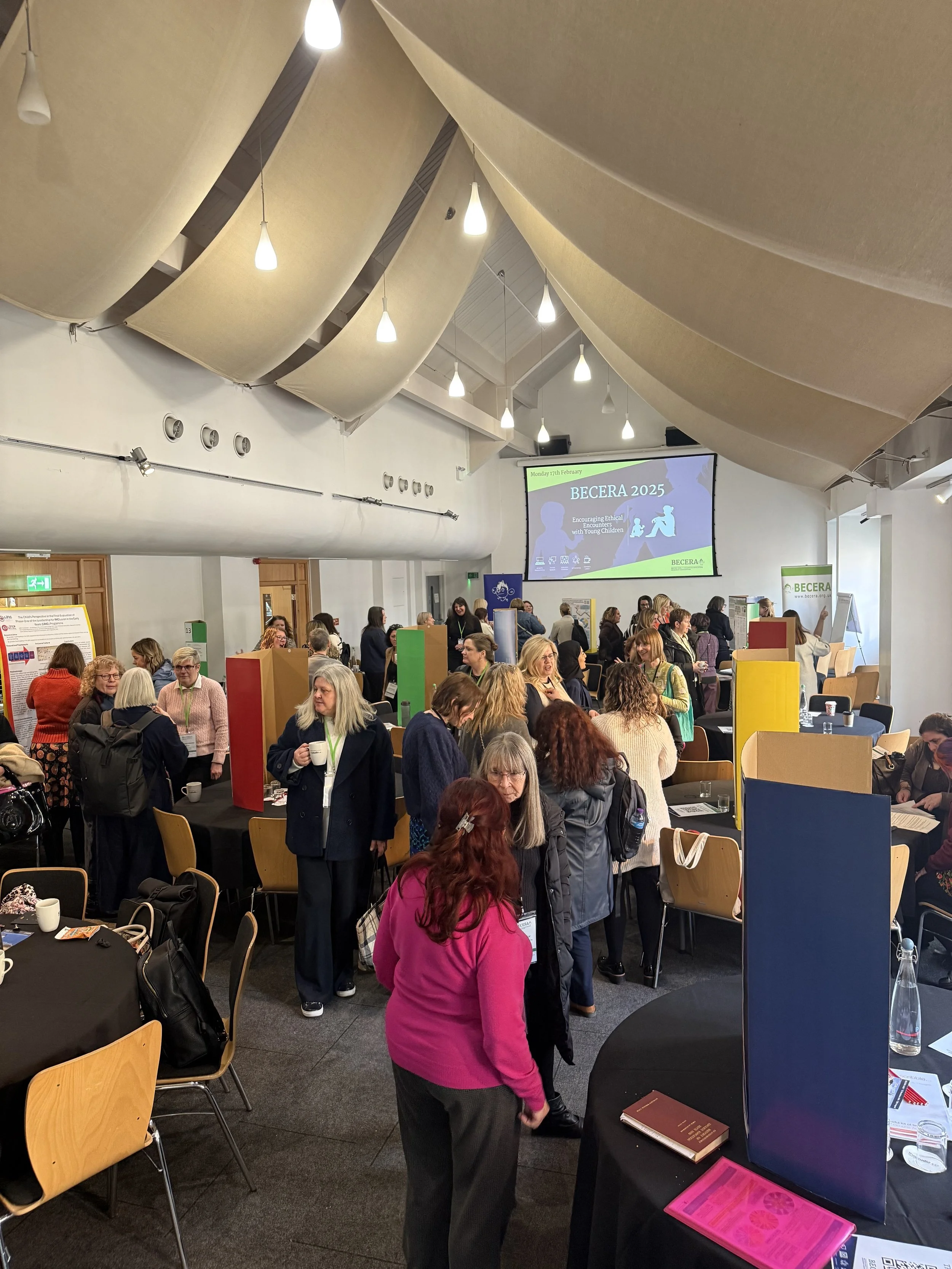
Stay Informed
Sign up to receive our conference updates for all the latest news. You can also follow @BECERAssoc and use #BECERA2026 on Facebook, LinkedIn and Bluesky.