Child-Led Storytelling as a Pedagogical Bridge in the Transition from Nursery to Reception
By Kate Shelley and Ceri Williams
Transitions in the early years are not simply logistical milestones; they are deeply relational, emotional moments in children’s lives. The move from nursery into reception, in particular, involves a subtle but significant shift in expectations around language, learning, and behaviour. For many children, this transition raises questions of belonging, confidence, and voice: Will my ideas still matter? Will I still count? Will I be understood?
Tales Toolkit argues that child-led storytelling can act as a powerful pedagogical bridge across this transition. Drawing on findings from a recent pilot, alongside wider research on oracy, inclusion, and transitions, we believe playful, story-based approaches support continuity of learning and uphold children’s agency as they move into more formal educational settings.
Context: EEF & IES
As part of the Department for Education’s Early Years Recovery Programme, the Education Endowment Foundation (EEF) worked with Stronger Practice Hubs to support education recovery following the COVID-19 pandemic, while also developing understanding of effective professional development in the early years. Funding enabled early years settings to access evidence-informed programmes, alongside evaluation of their influence on practice and perceived child outcomes.
The Tales Toolkit pilot was delivered through what was then the Thames Valley Stronger Practice Hub (now Thames Valley and South Central), with the EEF funding both programme access and an independent evaluation by the Institute for Employment Studies (IES). Thirty settings were recruited, spanning Private, Voluntary and Independent (PVI) providers, standalone maintained nursery schools, and nursery schools within infant or primary schools. Uniquely, the pilot included children aged three, four and five, and several settings also delivered Tales Toolkit in reception classes, allowing insights across the nursery–reception boundary.
What is Tales Toolkit?
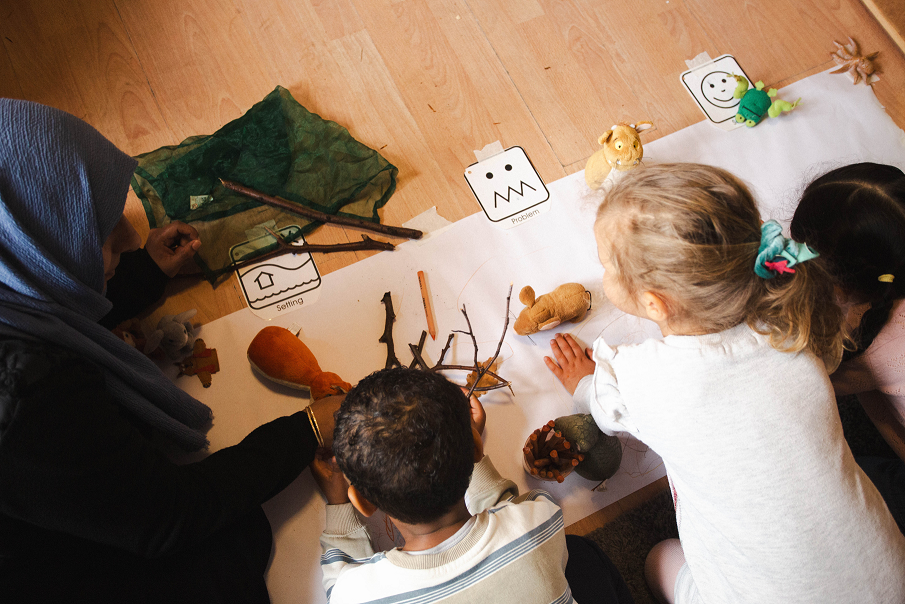
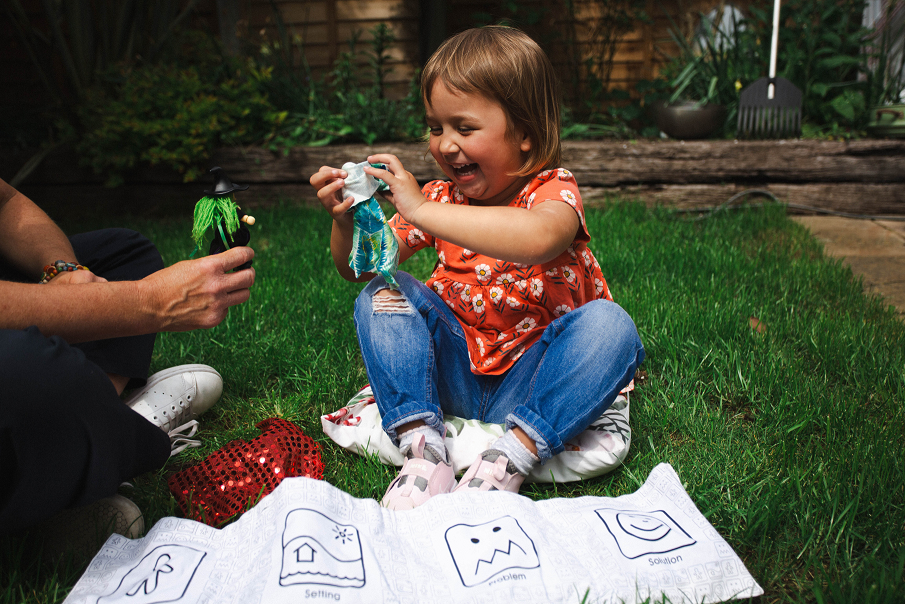
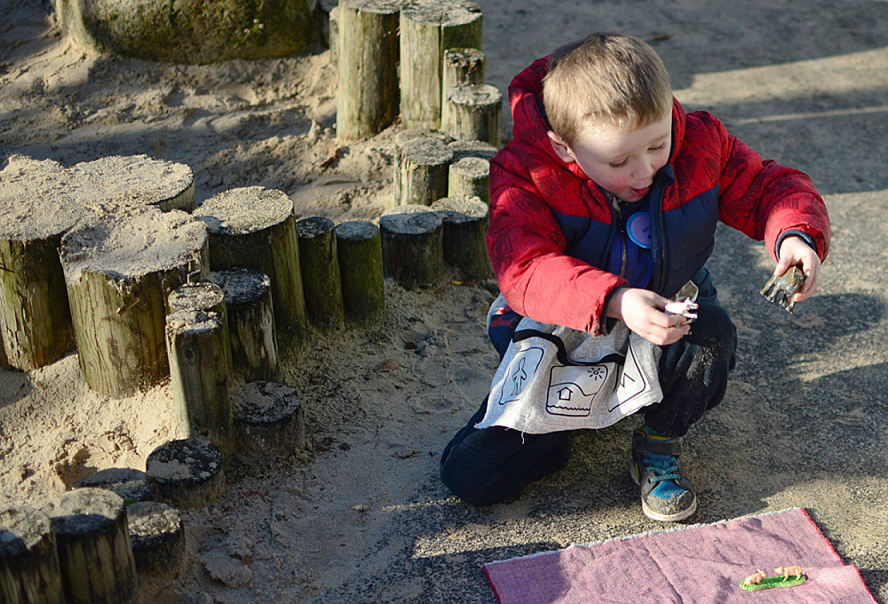
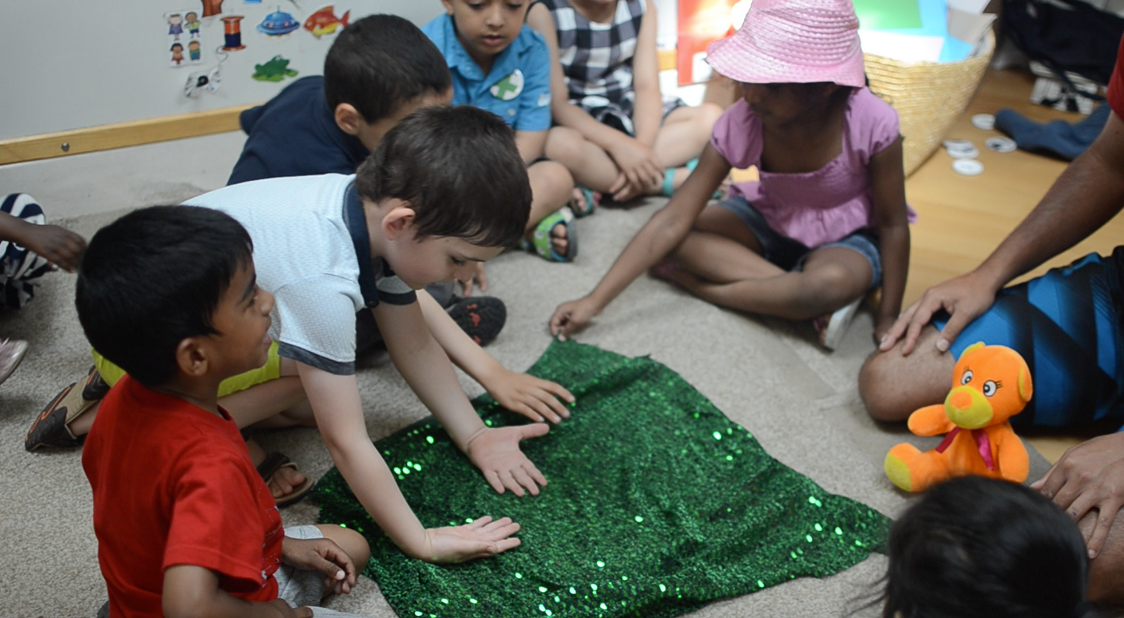
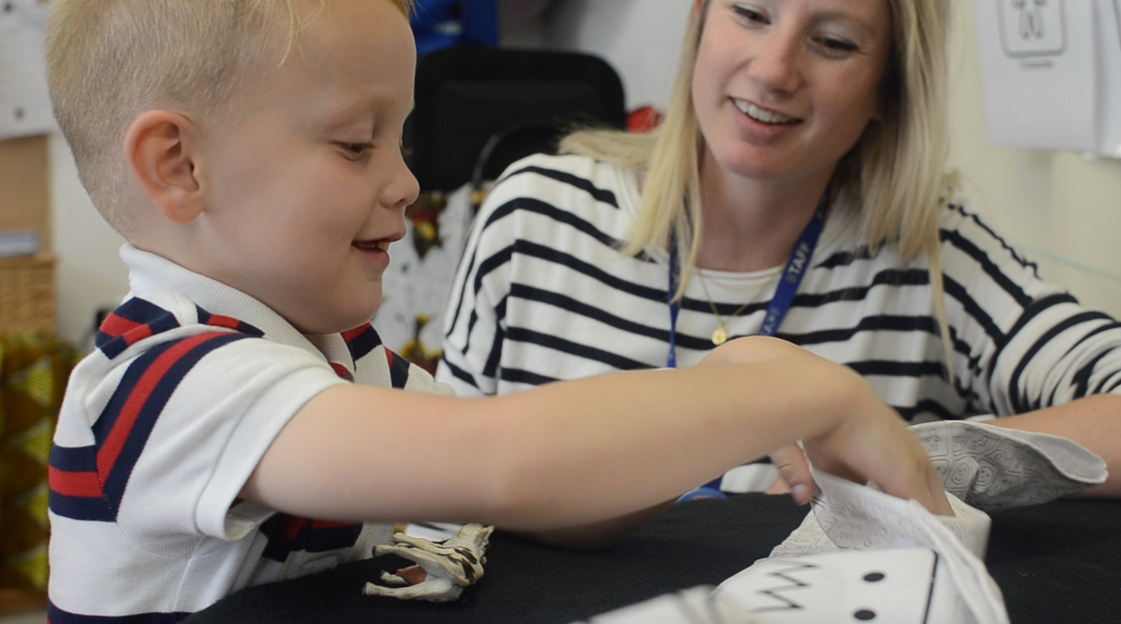
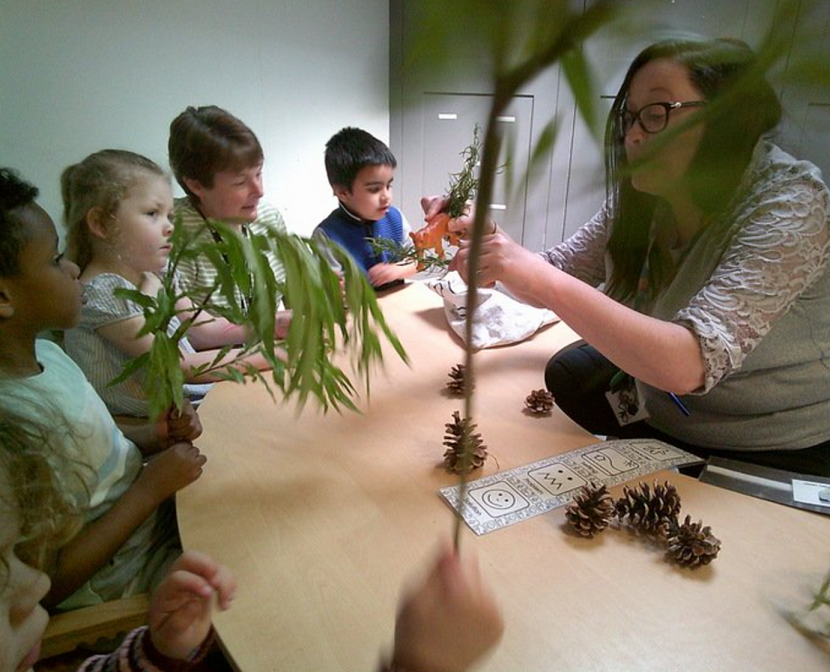
Tales Toolkit is a structured, play-based approach to storytelling that centres on four core elements: character, setting, problem and solution. Using real objects, shared talk, and imaginative play, children are supported to co-create stories, explore emotions, and solve problems collaboratively.
Crucially, Tales Toolkit is child-led. Adults are trained to model rich language and scaffold thinking, while following children’s ideas rather than directing outcomes. In doing so, the approach embeds high-quality interactions, sustained shared thinking, and inclusive participation — all within play, rather than in place of it.
These principles align closely with sociocultural theories of learning (Vygotsky, 1978) and with research emphasising the importance of oracy, interaction, and child agency in early development (Hussain et al., 2020; Jones Bartoli, 2018).
Evaluating the pilot: methods and practitioner outcomes
The IES evaluation adopted a mixed-methods, multiphase design (EEF, 2022), drawing on baseline and endline surveys, observations, and qualitative interviews with staff. While the pilot experienced attrition — particularly among PVI settings facing acute staffing pressures during the expansion of funded places — the data provide valuable insights into changes over time.
One strand of analysis focused on practitioner confidence and practice. Staff reported notable increases in confidence in supporting children’s language and communication, particularly for those receiving Early Years Pupil Premium (EYPP) and those with Special Educational Needs and Disabilities (SEND). For example, the proportion of staff who felt very confident in supporting EYPP children’s language development increased from 28% at baseline to 59% at endline, while confidence in supporting children with SEND doubled.
Changes were also reported in everyday practice. More practitioners described frequently engaging children in sustained shared thinking, modelling a wider range of vocabulary, and using storytelling to explore emotions, conflicts, and problem-solving — all skills that underpin positive transitions into school.
Perceived child outcomes: language, confidence and connection
As a pilot study, the evaluation did not include direct child outcome measures. However, staff were asked about perceived impacts on children, and the consistency of responses across surveys and interviews is striking.
Practitioners overwhelmingly reported improvements in language development, with 81% agreeing that Tales Toolkit had a positive impact on children’s communication, literacy, and language — particularly for children with SEND, EAL, and EYPP. Staff described children becoming more verbal, more confident to speak, and more able to connect ideas. One nursery teacher referred to Tales Toolkit as a “godsend” for children with significant speech and language needs, highlighting the role of adult modelling and repeated exposure to key vocabulary.
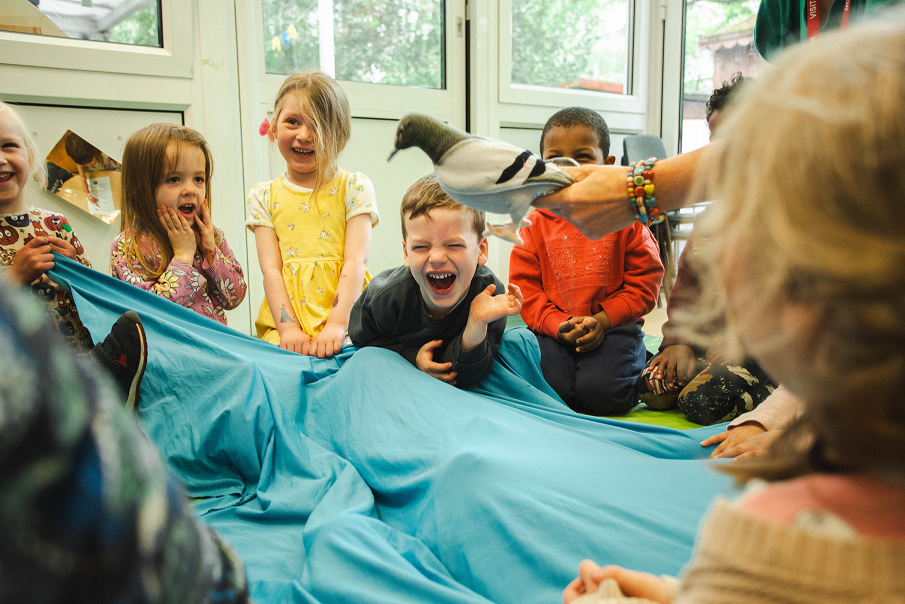
Importantly, the structure and familiarity of the storytelling sessions appeared to give children confidence. Knowing that there was no “right answer” encouraged participation from quieter children, while group storytelling enabled peer modelling — often perceived as more powerful than adult input alone.
Beyond language, staff reported benefits in personal, social and emotional development (PSED). Children were increasingly using the shared language of problem and solution in real-life situations, negotiating conflicts, taking turns, and listening to others’ ideas. These are precisely the kinds of social competencies that support successful transitions into reception, where children must navigate larger groups, new routines, and shared expectations.
Why storytelling matters for transitions
Transitions research consistently highlights the importance of continuity, relationships, and recognising children’s voices (Law et al., 2017; Stewart & Waldfogel, 2017). Yet in practice, the move to reception can sometimes involve a narrowing of pedagogy, with less time for open-ended play and imaginative talk.
The findings from the Tales Toolkit pilot suggest that child-led storytelling offers a way to hold on to what matters, while still supporting children to meet new demands. By strengthening oracy, creativity, and social problem-solving, storytelling helps children carry familiar ways of learning into new contexts. It supports what might be called a broader, more humane understanding of school readiness — one rooted not just in academic skills, but in confidence, communication, and connection.
As Kate Shelley and Ceri Williams argue in their forthcoming presentation, while the pilot did not explicitly study transitions, the outcomes observed — particularly around language, PSED, and agency — point clearly to the role of storytelling as a pedagogical bridge between nursery and reception.
Looking ahead
Child-led storytelling is not a niche intervention, nor a withdrawal from play. It is a universal, scalable approach that can be embedded within everyday practice, across ages, settings, and families.
As pressures on early years provision continue, approaches that honour children’s voices, support practitioners, and strengthen transitions are more vital than ever. Storytelling, it seems, is not just something children enjoy; it is something they need.
Conference session details
Child-Led Storytelling as a Pedagogical Bridge in the Transition from Nursery to Reception
Presenter(s): Ceri Williams (Institute for Employment Studies) and Kate Shelley (Tales Toolkit Ltd, UK)
BECERA Annual Conference, Symposium B4
At the end of the session, delegates will be signposted to the full Tales Toolkit Pilot Report and appendices, available via the Institute for Employment Studies website:
Tales Toolkit: Pilot Report | Institute for Employment Studies (IES)
References and further reading
Vygotsky, L.S. (1978). Mind in Society: The Development of Higher Psychological Processes. Cambridge, MA: Harvard University Press.
Jones‑Bartoli, A. (2018). Using storytelling to promote literacy, communication and socio‑emotional development in the early years. Project Report. Tales Toolkit / Unit for School and Family Studies, Goldsmiths, University of London. Available at: https://research.gold.ac.uk/id/eprint/24937/
Law, J., Charlton, J., Dockrell, J., Gascoigne, M., McKean, C. & Theakston, A. (2017).
Early Language Development: Needs, Provision, and Intervention for Preschool Children. London: Education Endowment Foundation.