
I have worked within the early years education sector for over 20 years. I am a strong advocate of children’s rights and always adopt a child-centred approach to my practice. During my role as a Special Educational Needs and Disability (SEND) co-ordinator, I always ensured that all the children who I worked with were able to access early years education. However, this was not always an easy endeavour. I have always lived and worked in Cornwall, and throughout my career and currently, there remain no specialist educational settings for children under the age of 5. While I believe that every child has a right to attend a mainstream setting, it is equally their right to attend a specialist setting, especially if it is more suited towards meeting their specific needs. Sadly, this is not an option open to young children in Cornwall. Many children with profound and multiple learning disabilities and complex medical needs are often unable to access their right to attend an early years setting alongside their peers. The reason for this comes down to a lack of funding and training to meet the needs of these amazing young children in mainstream settings. I wanted to do something about this. Our mainstream setting was a new build and designed to be fully accessible, so the physical barriers, such as a child being a wheelchair user for example, were already overcome. I worked with a small group of practitioners and developed a specialist SEND team within our setting. I also worked in partnership with our local authority and other professionals to create training opportunities and soon we were able to welcome children with complex learning and medical needs to our setting (see the links to my work, which I have included at the end to read more about how I achieved this).
During my time as a lecturer and now continuing as a student, I’ve been building my theoretical knowledge of early years inclusive education and have developed an interest in the conflicts between policy and practice. While it is every child’s right to be able to attend an educational provision (policy/legislation), there are no specialist educational provisions available to children with complex learning and medical needs under the age of 5 in Cornwall (practice). However, it was not until a personal experience I had with my own daughter that sparked the focus of my PhD thesis.

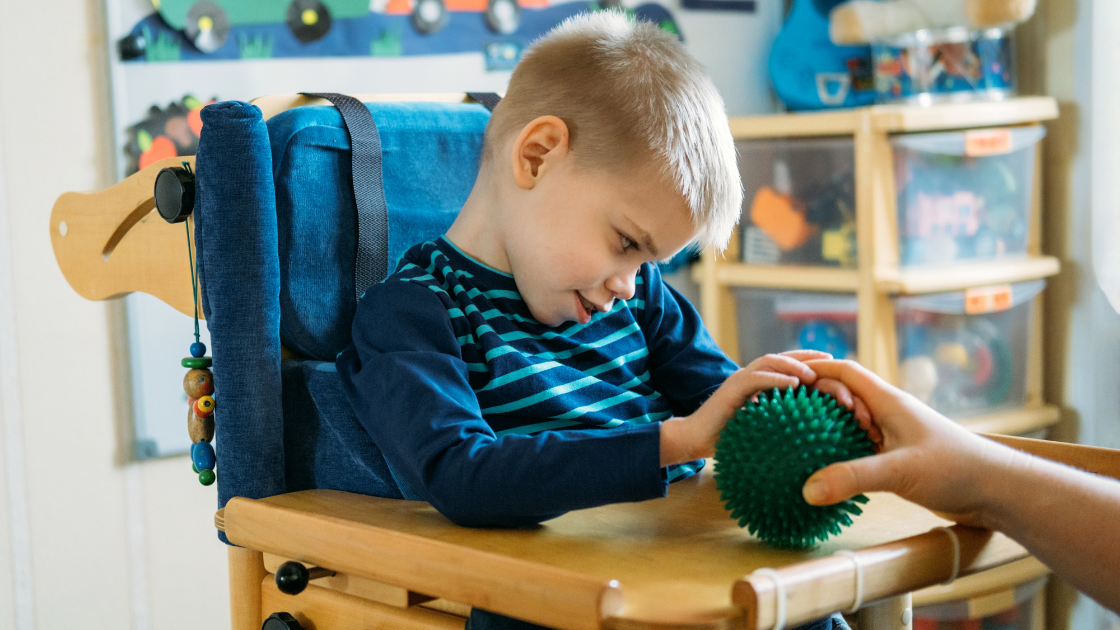
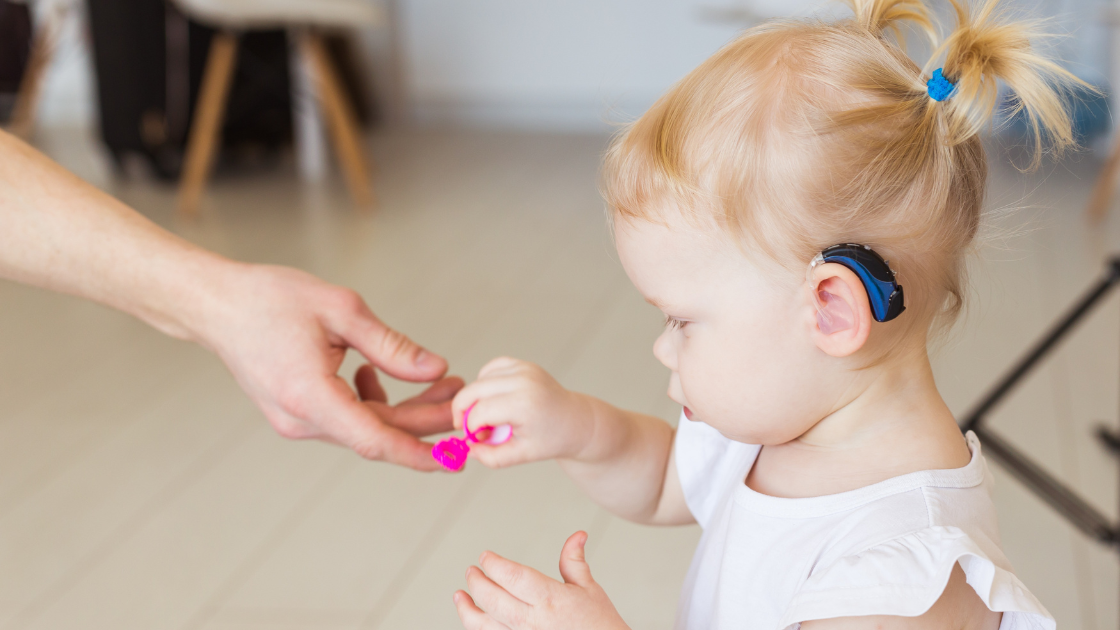
My daughter, who was 2 years old at the time, has complex medical needs and has had many professionals working with and supporting her consistently since birth. As we were initiating my daughter’s Education Health and Care Plan (EHCP) assessment, I was reviewing all her reports. In each report, where the professionals working with my daughter had an opportunity to write about the views of the child, many of those boxes had been left unfilled. The boxes that had something written either simply stated “CHILD IS TOO YOUNG TO GIVE HER VIEWS” or “child is non-verbal so views cannot be given”. Over the course of two years, not one professional could write down the views of my child. It did not sit right with me and prompted my further exploration of the conflict between policy and practice.
Enshrined within UK government policy and statutory practice guidance is a recognition that all children have the right to freely express their thoughts, feelings and wishes (DfE, 2025, DfE, 2014). Furthermore, under the United Nations Convention on the Rights of the Child (UNCRC), children have the right to have their voices heard and to be involved in decisions which affect them (Unicef, 1989). All these policies, legislation and statutory guidance apply to children from birth. However, from my own experience with my daughter, there seemed to be a conflict between her right to have a voice and her age and ability to express it. This needed further exploration.
After an initial review of literature, I discovered that, the voices of young children with SEND are the least likely to be heard and they are often excluded as participants within research (Dimitrellou and Male, 2020; Shakespeare, 2015, Kellett, 2010). Reasons for this disparity appeared to focus upon what the concept of voice actually meant, the ethical challenges associated with engaging in research with one of the most vulnerable participant groups and, ultimately, the appropriate ways of capturing the voices and lived experiences of our youngest children with SEND.
However, despite significant methodological and ethical implications, it is argued that research with all children, including children with SEND, should not be avoided just because capturing their views is perceived as challenging (Porter, 2014, Sing and Fong, 2010). I adopted the same view as Doak (2023) who argues that to discount the views of disabled children within research, upon the premise that it is an impossible task due to ethical concerns, is indeed more ethically problematic. This became the focus of my PhD thesis and the beginning of my journey towards capturing the voices and lived experiences of our youngest children with SEND.
The 16th BECERA annual conference: Childhood in transitions, is an opportunity for me to share my current research, which adopted a hermeneutical phenomenological approach. As a presenter, my aim is to provide an overview of my research and to highlight some of the ethical and methodological challenges I encountered. I will discuss how I navigated these challenges to enable me to conduct a case study with 3 young children with SEND under the age of 5, which included interviews with their parents and the practitioners working with them. I will additionally discuss my intended approach that I will be implementing to analyse and present my data. By the end of my presentation, I hope to have created a ripple of thought surrounding the importance of capturing the voices of our youngest children with SEND and how it can support you within your own practice, and be used to inform future policy developments.
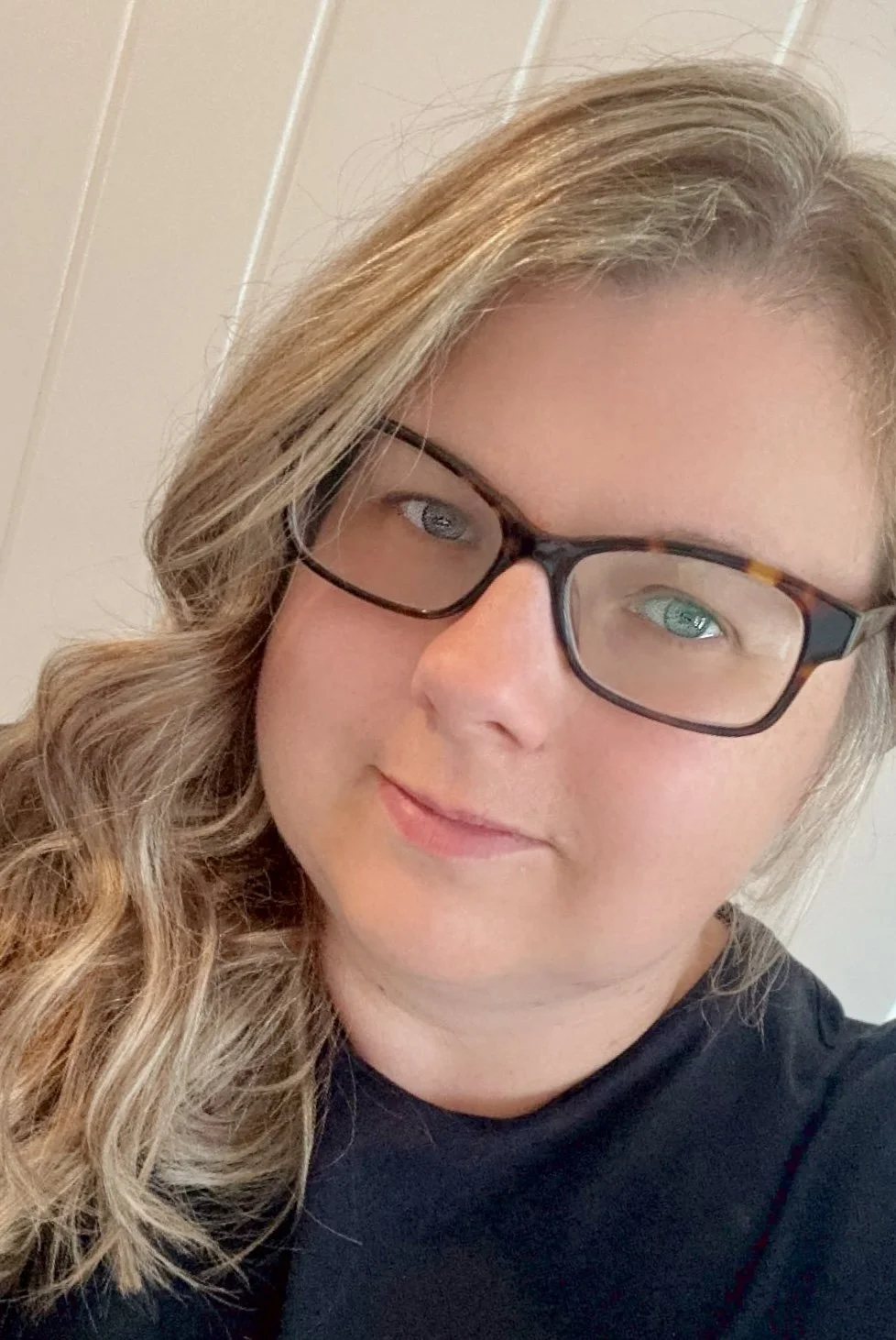
Hannah McCormak is currently studying towards her PhD at the University of Dundee.
She has over 20 years of experience working within the early years education sector. Many of these years have been spent working with and advocating for the rights of young children with SEND.
As a researcher, Hannah has a specific interest in a rights-based approach to practice capturing the voices and lived experiences of our youngest children with SEND. Hannah is a regular contributor to the SEND Network, an online community for SEND professionals, practitioners and advocates. Hannah has written articles for Nursery World and Community playthings hich aim to support professional practice, including policy updates, sharing effective strategies to support the learning and development of young children with SEND and how to create inclusive learning environments for all children.
Links to Hannah’s work
Nursery World - A Unique Child: Inclusion - Supporting… Alfie
Accessible classroom environments | Environments for children with SEND
Hannah McCormack | SEND Network
Hannah McCormac (2025) Case study: Meeting all of Toby’s needs. In Warren, C. (2025) Neurodiversity in the early years. London: Routledge. P162-163.
References
DfE (Department for Education). (2014) Special Educational Needs and Disability Code of Practice:0 to 25 years. [Online] Available from: EYFS statutory framework for group and school-based providers [accessed 12 December 2025].
DfE (Department for Education). (2025 Statutory Framework for the Early Years Foundation Stage. [Online] Available from: Statutory framework for the early years foundation stage (publishing.service.gov.uk). [accessed 02 Deecember 2025].
Dimitrellou, E. and Male, D. (2020) 'Understanding what makes a positive school experience for children with SEND: can their voices inform inclusive practice?', Journal of research in special educational needs, 20(2), pp. [Online]. Available at: https://nasenjournals-onlinelibrary-wiley-com.libezproxy.dundee.ac.uk/doi/full/10.1111/1471-3802.12457 (Accessed: 12 December 2025).
Doak, L. (2023) Do all children have the right to express views? In Beckett, A.E and Cullus, A.M. (ed.) The Routledge international handbook of children’s rights and disability. London: Routledge, p188-203.
Kellett, M. (2010) Rethinking children and research. Continuum: London.
Porter, J (2014) 'Research and pupil voice', in Florian, L. (ed.) The Sage handbook of special education. London: Sage, pp. 405-421.
Shakespeare, T. (2015). Disability Rights and Wrongs Revisited. Abingdon: Routledge
Sin,C,H., and Fong, J. (2010) 'Commissioning research, promoting equality: reflections on the Disability Rights Commission's experiences of involving disabled children and young people', Children's Geographies, 8(1), pp. 9-24 [Online]. Available at: https://www.tandfonline.com/doi/full/10.1080/14733280903500174?needAccess=true (Accessed: 12 December 2025).
Unicef. (2019) The United Nations Convention on the Rights of the Child. Available [online] at: Convention on the Rights of the Child text | UNICEF (accessed 12 December 2025).
If you’re interested in this, you may also like
Eilers, N. (2023). Individualized education program development in early childhood education: a disabled children’s childhood studies perspective. European Early Childhood Education Research Journal, 31(1), 22–33. https://doi.org/10.1080/1350293X.2022.2147974
Recchia, S. L., & McDevitt, S. E. (2023). A place for Miguel: discovering the power of belonging within an inclusive toddler community. European Early Childhood Education Research Journal, 31(1), 51–63. https://doi.org/10.1080/1350293X.2022.2159055