Undoing the Expressive Child: Gender, Space, and the Transition from EYFS to Year 1
Transitions in early childhood are often framed as natural progressions. Moving from the Early Years Foundation Stage into Key Stage 1 is frequently described as a positive step forward, a sign of maturity, readiness, and development (Department for Education, 2023). Research has long critiqued this shift, particularly the movement from play based learning towards more formalised pedagogies (Broström, 2019). Yet my doctoral research suggests that the implications of this transition reach far beyond pedagogy. What is often undone in this process is not only play, but children’s capacity for gender expression.
From a New-Hermetic Materialist perspective (Drake, 2022), transition is not simply a change in curriculum or routine. It is a relational and material reconfiguration that reshapes how children can move, act, feel, and become. Gender expression, understood here as fluid, affective, and emergent rather than fixed or categorical, is deeply entangled with space, matter, and social encounter (Bennett, 2010). When these conditions shift, expression shifts with them.
The expressive child in the EYFS
Early years environments are uniquely attuned to multiplicity. EYFS spaces are typically open, flexible, and responsive, offering children opportunities to experiment with identity through play, movement, materials, and imagination. Gender expression here often appears quietly, playfully, and without declaration. It emerges through dressing up, role play, construction, outdoor exploration, and peer relations. It is relational rather than individual, and always in motion.
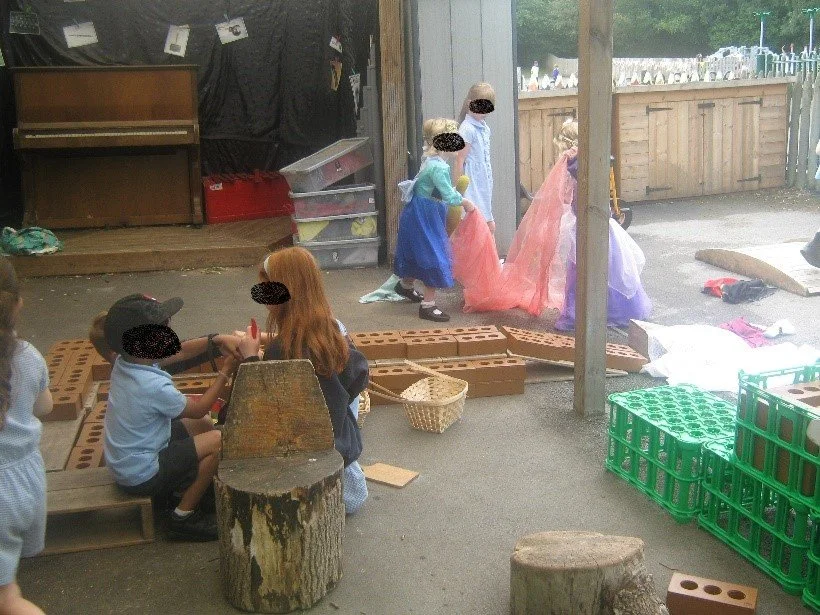
Image 1: Expressing self in the EYFS (Image from the author’s doctoral research, shared with full ethical approval and informed consent).
Image 1 visually captures multiplicity in action. Children in princess dresses playing alongside children building with bricks suggests how EYFS spaces allow diverse expressions to coexist without hierarchy or disruption. The image reinforces the argument that EYFS environments do not demand coherence or explanation from children (Bruce, 2011). Expression is permitted simply to be.
Drawing on mosaic-inspired methodologies (Clark and Moss, 2001), my research listened to children across contexts, not only through speech, but through movement, material engagement, and affective encounters. This approach aligns with a new materialist commitment to attending to how children express themselves with space and matter, not just within them (Taylor and Hughes, 2016).
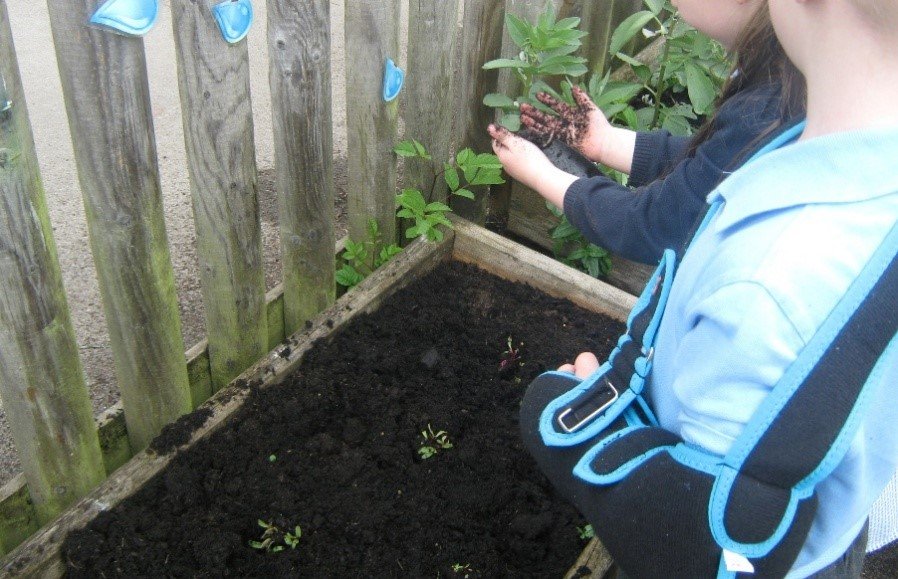
Image 2: Exploring the worms when planting (Image from the author’s doctoral research, shared with full ethical approval and informed consent).
Image 2 pictures a child holding soil and a worm. This moment captured gender expression not as performance, but as relational engagement with the world. Echoing the work of Blaise, Hamm and Iorio’s (2017) emphasis on attending to affective encounters and the importance of meaning-making in early years.
Crossing the threshold into Key Stage 1
Yet, the transition into Year 1 marks a significant material and symbolic shift. Classrooms become more structured, space is reorganised, and expectations around stillness, productivity, and compliance intensify. Uniforms, binary toilet systems, desk based learning, and reduced access to imaginative play collectively narrow the range of expressions available to children (Paley, 2004).
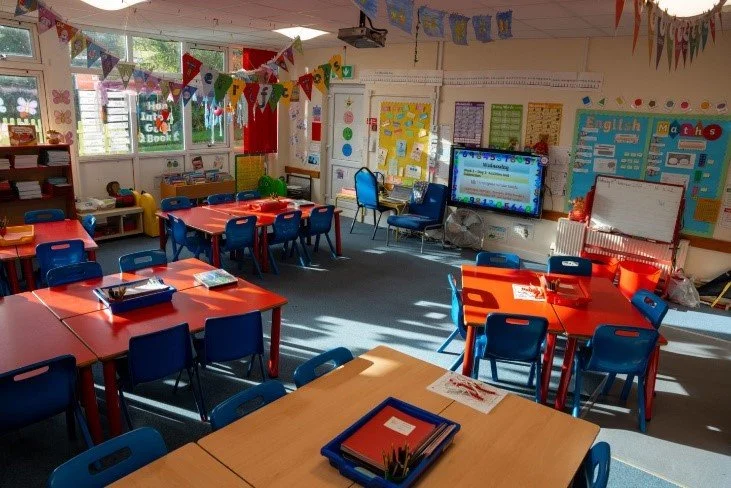
Image 3: An example of a typical Year 1 classroom. Image taken from websource.
Image 3 contrasts sharply with the earlier visuals. The tables, smart board, and carpeted learning zone visually communicate containment and regulation. It helps make visible how space itself carries expectations about behaviour, attention, and acceptable forms of being (Foucault. 1977).
From a New-Hermetic Materialist lens, this transition can be understood as an energetic contraction. The expressive openness of EYFS environments gives way to environments that privilege order, coherence, and predictability. Gender expression, which thrives in ambiguity and play, becomes harder to sustain. Children are not explicitly told to stop expressing themselves, but the conditions that once enabled such expression quietly to disappear (Deleuze and Guattari, 1987).
Rethinking transition
Transitions are not neutral. They are charged moments where values are enacted and futures shaped. Rather than viewing the EYFS to KS1 transition as a necessary narrowing, my research invites us to reconsider what is being prioritised and at what cost (Osgood, 2012). The issue is not that Year 1 exists, but that it often asks children to adapt to systems rather than asking systems to remain responsive to children (Moss, 2013).
Importantly, this does not require wholesale curriculum reform. Small, intentional shifts can make a significant difference. Preserving playful spaces, offering flexibility around uniforms, maintaining access to imaginative materials, and rethinking how space is organised can support continuity of expression. These micro-adjustments create meaning0making experiences from the Matter that matters to them (Dahlberg, Moss and Pence, 2013).
Why this work matters
This research matters because transitions teach children what is valued. When expressive possibilities are reduced, children learn which parts of themselves are welcome and which must be set aside. At BECERA 2026, my presentation will explore these ideas in greater depth, drawing on empirical insights from my doctoral study and inviting dialogue around how we might design transitions that expand, rather than undo, children’s expressive lives.
About the Author:
Dr Kate Dudley is a Senior Lecturer in Early Childhood Studies and Co-ordinator of Early Years Professional Practice at Birmingham Newman University.
References
Bennett, J. (2010) Vibrant Matter: A political ecology of things. Durham: Duke University Press.
Blaise, M., Hamm, C. and Iorio, J. M. (2017) ‘Modest witnessing and lively stories: Paying attention to matters of concern in early childhood education’, Pedagogy, Culture & Society, 25(1), pp. 31–42.
Broström, S. (2019) ‘Children’s perspectives on transitions from preschool to school’, International Journal of Transitions in Childhood, 5(1), pp. 3–14.
Bruce, T. (2011) Learning through play: For babies, toddlers and young children. 2nd edn. London: Hodder Education.
Clark, A. and Moss, P. (2001) Listening to Young Children: The Mosaic approach. London: National Children’s Bureau.
Dahlberg, G., Moss, P. and Pence, A. (2013) Beyond quality in early childhood education and care: Languages of evaluation. 3rd edn. London: Routledge.
Deleuze, G. and Guattari, F. (1987) A Thousand Plateaus: Capitalism and schizophrenia. London: Continuum.
Department for Education (2023) Statutory framework for the early years foundation stage. London: DfE. Available at: https://www.gov.uk/government/publications/early-years-foundation-stage-framework--2 (Accessed: [insert date]).
Drake, A. (2022) New Hermeticism: Philosophy, materiality and the spiritual turn. London: Routledge.
Foucault, M. (1977) Discipline and Punish: The birth of the prison. London: Penguin.
Moss, P. (2013) Early childhood and compulsory education: Reconceptualising the relationship. London: Routledge.
Osgood, J. (2012) Narratives from the nursery: Negotiating professional identities in early childhood. London: Routledge.
Paley, V. G. (2004) A Child’s Work: The importance of fantasy play. Chicago: University of Chicago Press.
Taylor, C. A. and Hughes, C. (2016) Posthuman Research Practices in Education. London: Palgrave Macmillan.
If you’re interested in this, you may also like
Boylan, F., Barblett, L., Lavina, L., & Ruscoe, A. (2024). Transforming transitions to primary school: using children’s funds of knowledge and identity. European Early Childhood Education Research Journal, 32(4), 704–718. https://doi.org/10.1080/1350293X.2023.2291354
Oo, A. T., & Hognestad, K. (2026). Bridging kindergarten and school through play: the role of play pedagogies in supporting transitions in Norway. European Early Childhood Education Research Journal, 1–19. https://doi.org/10.1080/1350293X.2026.2614625