
Social justice in early childhood is often framed around challenging systems, barriers and inequalities. But what happens when we turn the lens towards ourselves? Drawing on New-Hermetic Materialism, this blog explores how our histories, identities and entanglements shape practice, and why meaningful change must begin with reflexivity.
What if we are part of the problem?
Social justice in early childhood is often discussed in relation to the inequalities children face, the systems that shape their experiences and the barriers that limit their opportunities. We recognise the importance of inclusion, advocate for children's rights and strive to create environments in which every child can flourish. But how often do we stop to consider our own role within these inequalities?
What if, despite our best intentions, we are contributing to the very conditions we seek to challenge?
Our values, assumptions and understandings of the world do not emerge in isolation. They are shaped by our histories, experiences, relationships and the social and cultural expectations we have encountered throughout our lives. These do not simply disappear when we enter our professional roles.
Perhaps, then, working towards social justice requires us to look beyond the inequalities we observe and begin questioning what we ourselves bring into the encounter.
The inequalities we carry
We often recognise inequalities through what we can see: differences in opportunity, access, representation or participation. Yet, the conditions that shape these inequalities are not always immediately visible.
Consider the expectations we hold about children's behaviour, identity or development. Where did these expectations originate? How have our own childhood experiences, education, relationships and cultural understandings contributed to what we consider normal, appropriate or desirable?
Our identities are not singular or fixed. We exist through multiplicities of experiences, relationships and histories that continually influence how we understand ourselves and others.
Whether considering gender, race, class, disability or other dimensions of identity, inequalities do not exist independently of the people, histories and environments through which they emerge.
As Ahmed (2012) highlights, institutional commitments to diversity do not necessarily translate into meaningful change. Recognising this invites us to question how inequalities remain entangled within everyday interactions, expectations and professional decisions.
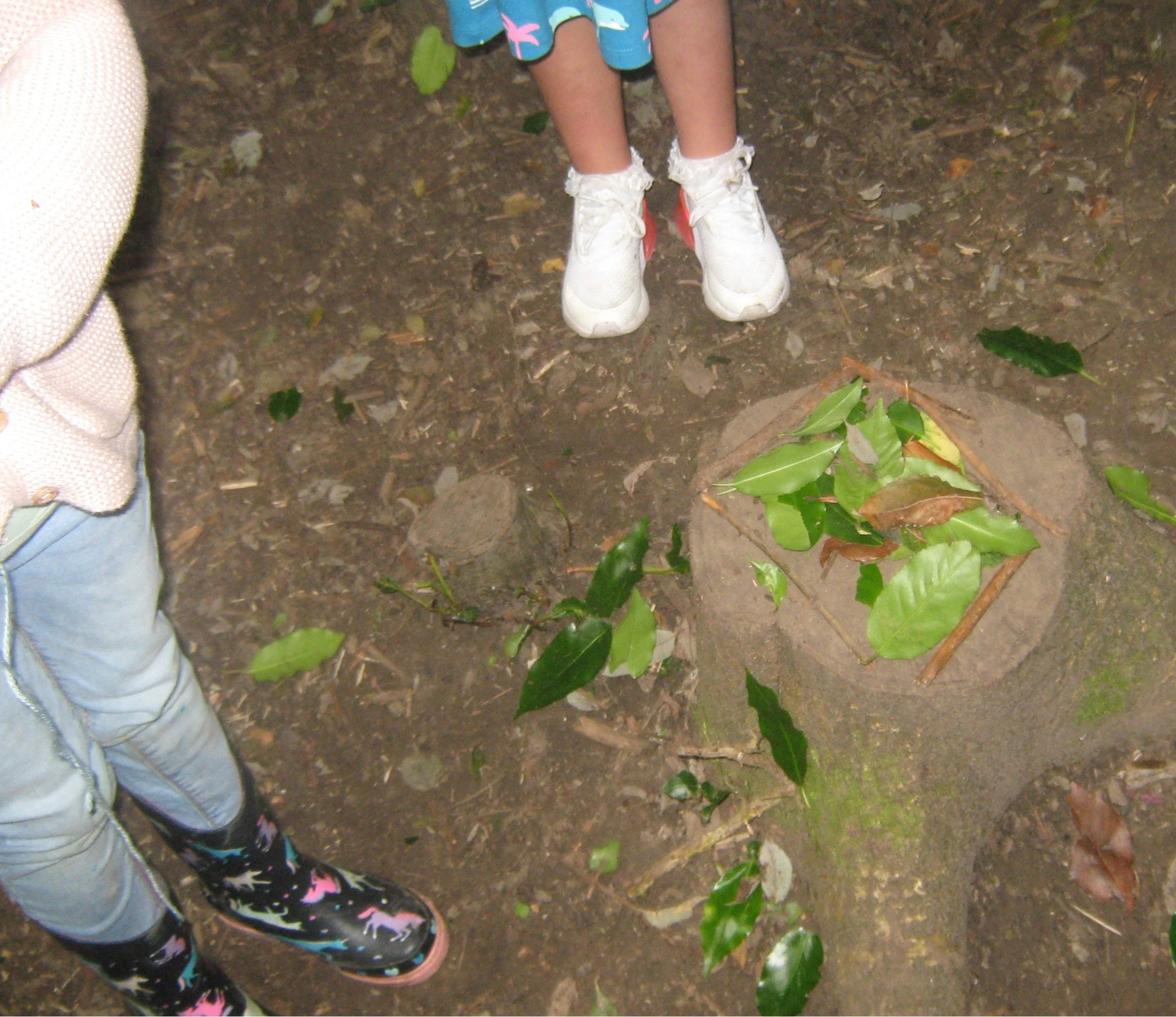
Figure 1: Children exploring natural materials during Forest School (Dudley, 2025).
Thinking differently through New-Hermetic Materialism
New materialist perspectives have challenged understandings of the world that separate people from the environments and materials with which they interact.
Barad (2007) invites us to reconsider how matter and meaning emerge through relationships, while Bennett (2010) draws attention to the agency of nonhuman matter.
These perspectives raise important questions for early childhood education. Classrooms, resources, routines and physical spaces are not simply passive backgrounds against which children's experiences unfold. They participate in shaping what becomes possible.
New-Hermetic Materialism (NHM) (Dudley, 2026b) builds upon these philosophical conversations, inviting consideration of the temporal, relational and experiential entanglements that shape becoming.
NHM encourages consideration of how past experiences, inherited understandings and multiplicities of identity remain implicated in present encounters. What matters is not simply the immediate interaction, but the wider entanglements through which that interaction becomes possible.
From this perspective, social inequalities cannot be understood as belonging exclusively to individuals, institutions or particular moments in time. They are shaped and sustained through interconnected relationships, histories, material conditions and practices.
This offers an opportunity to reconsider social justice, not simply as something we work towards, but as something we are continually participating in, consciously or otherwise.
Looking in the mirror: The responsibility of reflexivity
In my recent paper, The Missing Reflection: Practitioner Reflexivity and the Incomplete Story of the Unique Child (Dudley, 2026a), I question whether our commitment to recognising every child as unique can ever be fully realised without recognising the uniqueness of those working alongside them.
We spend considerable time observing, assessing and reflecting upon children. Yet, how often do we turn that same attention towards ourselves?
Reflexivity asks us to move beyond considering what happened or what we might do differently. It requires us to examine how our histories, identities, assumptions and positioning influence what we notice, how we interpret experiences and the decisions we make.
Consider a child whose expression challenges our expectations. Do we question the child, or do we question the expectations through which we understand them?
This is particularly important when considering social justice. Our intentions may be inclusive, yet intentions alone cannot guarantee that our practices are equitable.
Reflexivity therefore becomes more than a professional exercise. It is an ethical responsibility to recognise our own participation within the conditions that shape children's opportunities, identities and experiences.
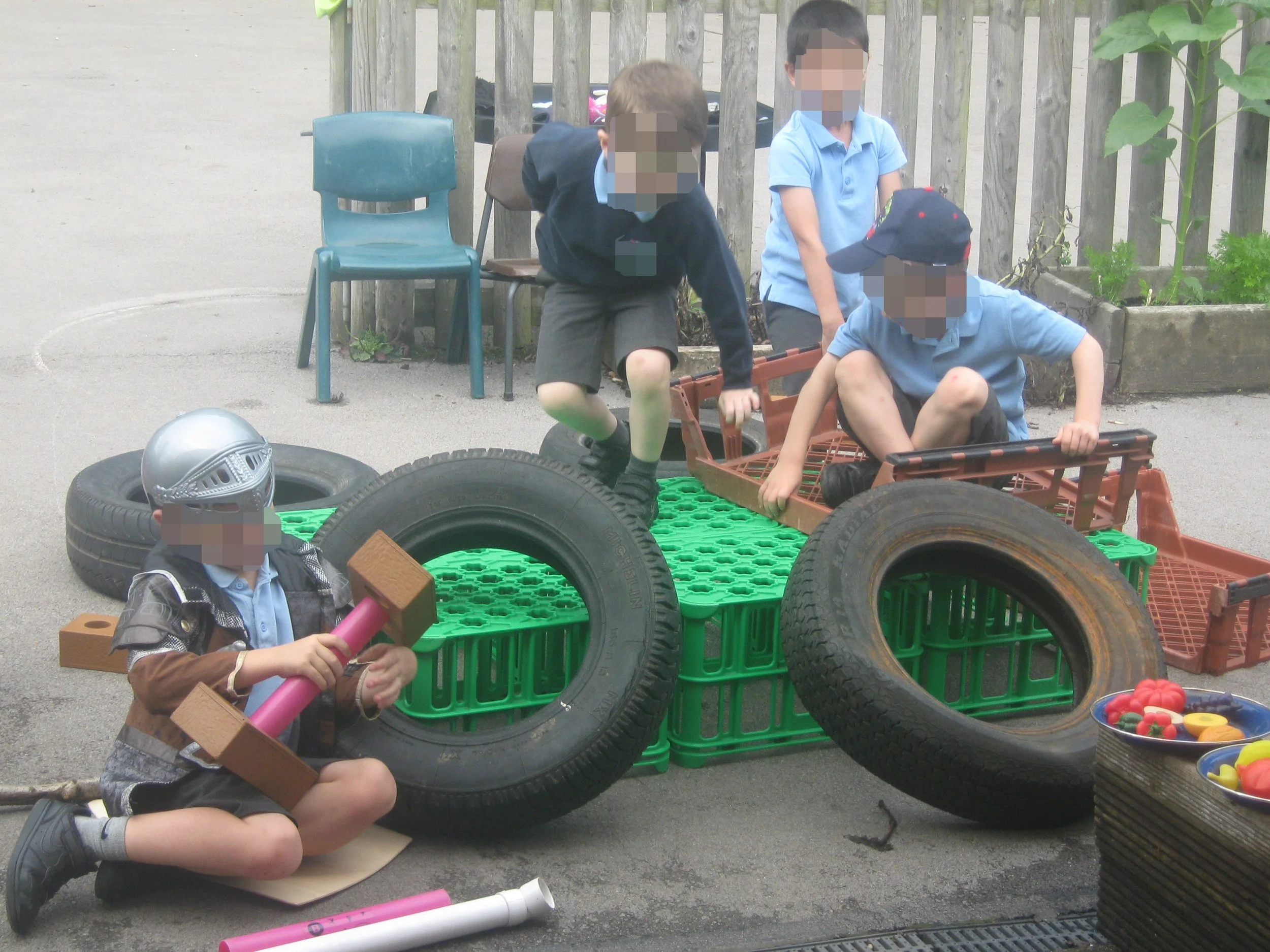
Figure 2: Children exploring imagination and expression through open-ended play (Dudley, 2025).
Where does change begin?
If social inequalities are entangled within our histories, relationships and environments, meaningful change cannot rely solely upon introducing new policies, resources or approaches.
These remain important, but we must also consider the people who interpret and enact them.
This is not about placing responsibility for systemic injustice upon individual practitioners. Nor is it about suggesting that self-reflection alone can dismantle deeply embedded inequalities.
Instead, it is about recognising that we are not separate from the systems we wish to change.
Perhaps this begins with asking ourselves:
Whose expectations shape what we consider appropriate or acceptable?
How might our histories influence the opportunities we create for children?
What assumptions do we continue to reproduce without recognising them?
How might recognising our own multiplicities create space for children to express theirs?
Echoing Freire's (1970) understanding of reflection and action as interconnected, these questions invite us to move beyond recognising inequalities towards interrupting the patterns through which they persist.
These ideas form the foundation of my presentation at BECERA 2027, Working for Social Justice in Early Childhood, where I shall be exploring how NHM might offer new ways of understanding inequality and why practitioner reflexivity must be part of our collective responsibility for change.
If we want to change the world children experience, perhaps we must first be willing to examine the worlds we carry within ourselves.
And perhaps that is where social justice begins. In the mirror.
References
Ahmed, S. (2012) On Being Included: Racism and Diversity in Institutional Life. Durham, NC: Duke University Press.
Barad, K. (2007) Meeting the Universe Halfway: Quantum Physics and the Entanglement of Matter and Meaning. Durham, NC: Duke University Press.
Bennett, J. (2010) Vibrant Matter: A Political Ecology of Things. Durham, NC: Duke University Press.
Dudley, K. (2025) Listening through the Eyes of Children: An Entangled Mosaic Approach to Gender Expression in the Early Years. Doctoral thesis (EdD), Liverpool Hope University. Available at: https://katedudley.co.uk/research/listening-through-the-eyes-of-children
Dudley, K. (2026a) ‘The missing reflection: Practitioner reflexivity and the incomplete story of the unique child’, Contemporary Issues in Early Childhood.
Dudley, K. (2026b) ‘Tracing patterns in entangled worlds: Developing New-Hermetic Materialism for educational research’, Educational Futures, 17(1).
Freire, P. (1970) Pedagogy of the Oppressed. New York: Herder and Herder.

Dr Kate Dudley is a Senior Lecturer in Early Childhood Studies and Professional Practice Co-ordinator at Birmingham Newman University.
Her research explores children's identity and expression, practitioner reflexivity and the relational conditions shaping early childhood experiences. Through this research, she has developed New-Hermetic Materialism, a theoretical perspective that invites reconsideration of matter, temporality, identity and becoming within educational research and practice.
To explore more of my research and publications, please visit my website at www.katedudley.co.uk or connect with me on LinkedIn. Dr Kate Dudley on LinkedIn